
2023 - 2025 Results of Tick-Borne Disease Surveillance Program
Mikenna Smith, TCWP Entomologist, and Kelsey Mitchell, TCWP Biologist, recently presented the results of the first three years of our Tick Surveillance Program in Jackson to the Integrated Pest Management Working Group. Below is a summary of their presentation.
About the TCWP Tick Surveillance Program
Teton County Weed and Pest (TCWP) manages programs focused on vectors, applied research, invasive plant management, and community education and outreach. Our vector program includes decades of mosquito surveillance and control, while our Tick Surveillance Program is now entering its third year.

The Tick Surveillance Program was established in response to several factors, including:
- The increasing incidence of tick-borne diseases across the United States.
- The expanding geographic range of several tick species.
- The lack of comprehensive tick surveillance data in Wyoming.
- The opportunity to build in-state laboratory capacity for pathogen testing.
The program includes active surveillance, passive surveillance, species identification, pathogen testing, and public education.
Active surveillance consists of standardized 30-minute flagging surveys conducted in topographically complex habitats. To standardize sampling effort, tick abundance is measured by time rather than distance. Surveyors spend 15 minutes sampling on each side of a trail, for a total of 30 minutes.
Passive surveillance relies on community members and partners submitting ticks collected from humans, pets, livestock, wildlife, or by hand.
Statewide Tick & Pathogen Surveillance
What began as a county-level surveillance effort quickly expanded into a statewide program thanks in large part to funding from the Wyoming Mosquito Vector Management Association. This support allowed TCWP to increase surveillance efforts across Wyoming and begin developing a more comprehensive understanding of tick distributions statewide.
Surveillance Data (2023–2025)
Below you'll find the surveillance data from 3 years of our efforts.
Total Ticks Collected (2023–2025)
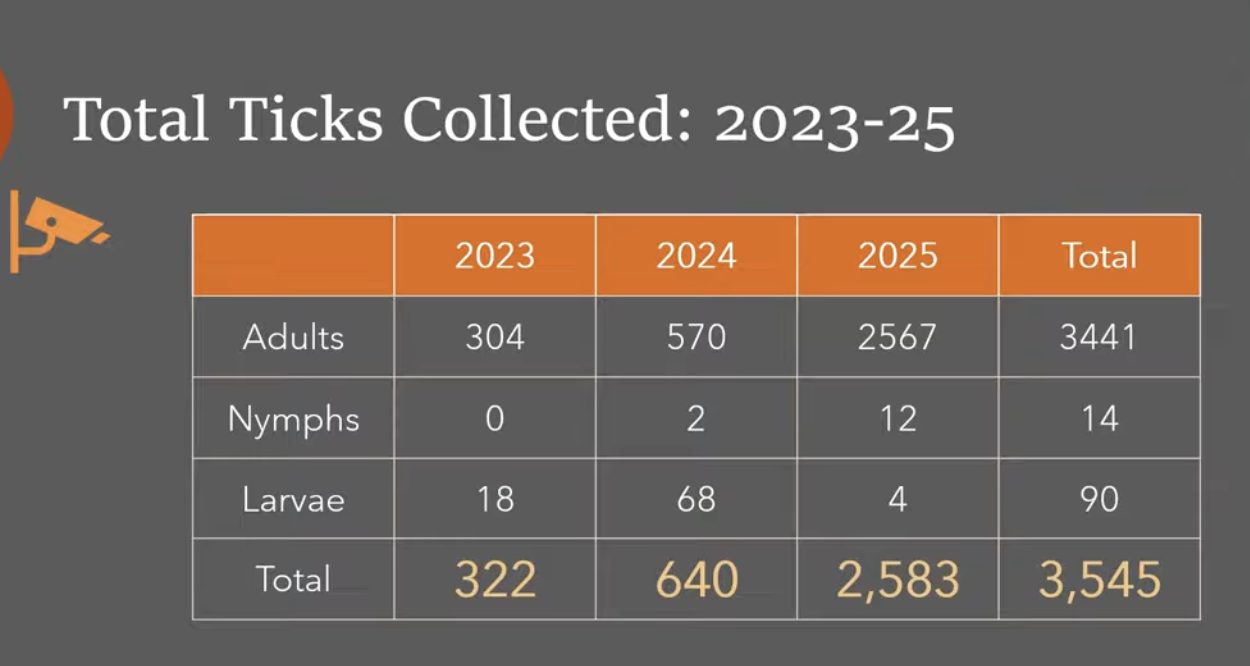
Although the majority of ticks have been collected in Teton County, this reflects where most surveillance efforts have occurred rather than indicating a higher tick population in our county.
Likewise, increases in the total number of ticks collected from year to year will reflect the continued expansion of the surveillance program rather than an increase in tick abundance. As surveillance balances, this data will become representative of tick populations throughout Wyoming over time.
The vast majority of ticks collected by our team are adults.
Total Ticks Collected by Method (2023–2025)
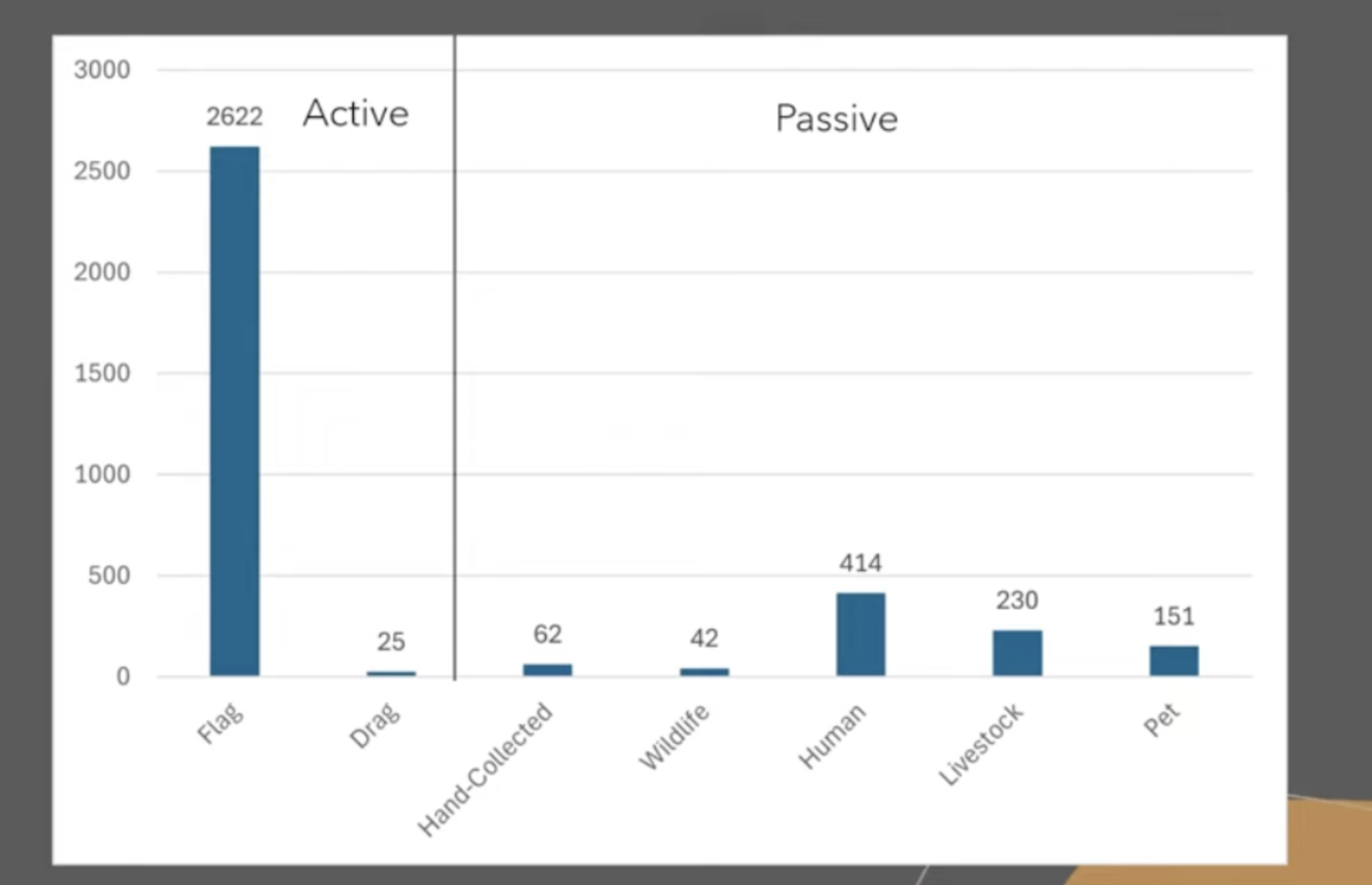
Of our actively collected data, the vast majority of ticks are collected by flagging, with a small number collected by dragging.
Of the passive methods of collection, the majority of ticks come from human contact with a smaller amount coming from livestock and pets. We do get a couple dozen hand collected ticks every year.
Total Ticks Collected by County (2023–2025)
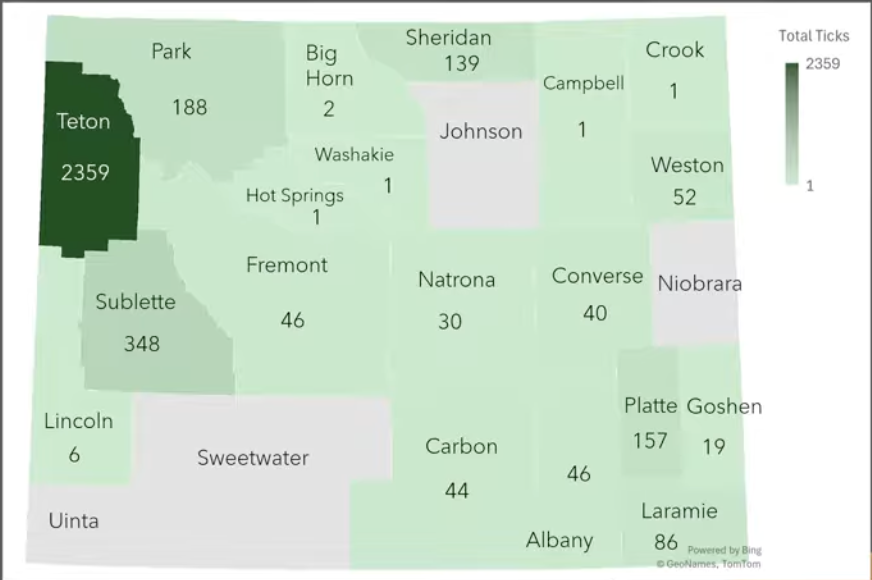
This chart is biased towards Teton County, no there are not more Ticks in Teton County, this is where the majority of the surveillance occurs. The 2359 number in Teton County is an artifact of surveillance.
You can see we do have a few counties with bigger collections. We have pretty dedicated citizen scientists and collaborators from other Districts in Park County, Sublette, Sheridan and Laramie County - so we are getting quite a few ticks sent out way.
Tick Phenology (2023–2025)
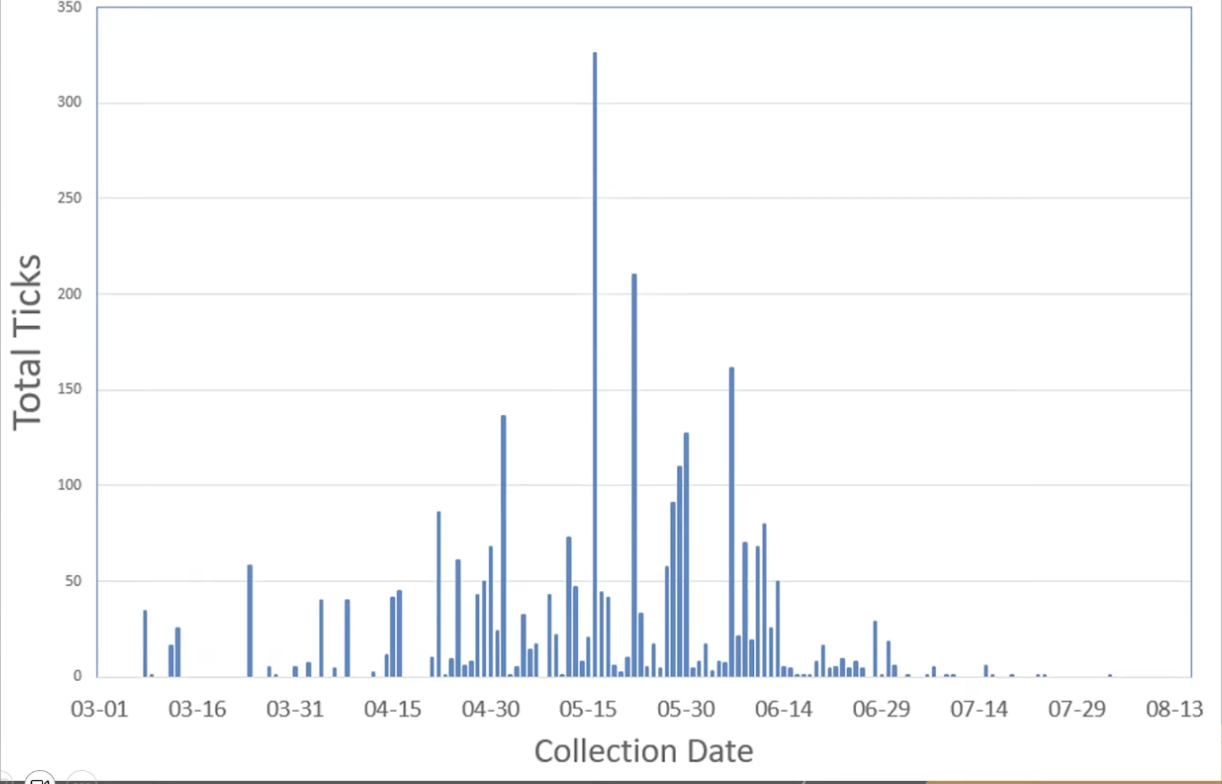
Many people assume ticks become active in May; however, ticks begin emerging much earlier—as soon as snow starts receding in March. We are really high elevation, 6,000+ feet and neighboring counties are 7,000+ feet and as soon as that snow melts we are starting to see ticks. Understanding this seasonal activity helps our team tailor public health messaging and encourages residents and visitors to begin practicing tick prevention earlier in the season.
The increase in tick collections during May is largely the result of our annual Tick Blitz event in 2025, which significantly increased sampling efforts during that month.
By mid-summer, TCWP staff transition to other seasonal responsibilities, resulting in reduced surveillance effort for tickslater in the season as priorities shift to West Nile Virus and some other things. This shift is also reflected in the seasonal collection data.
Teton County Select Sites (2025)
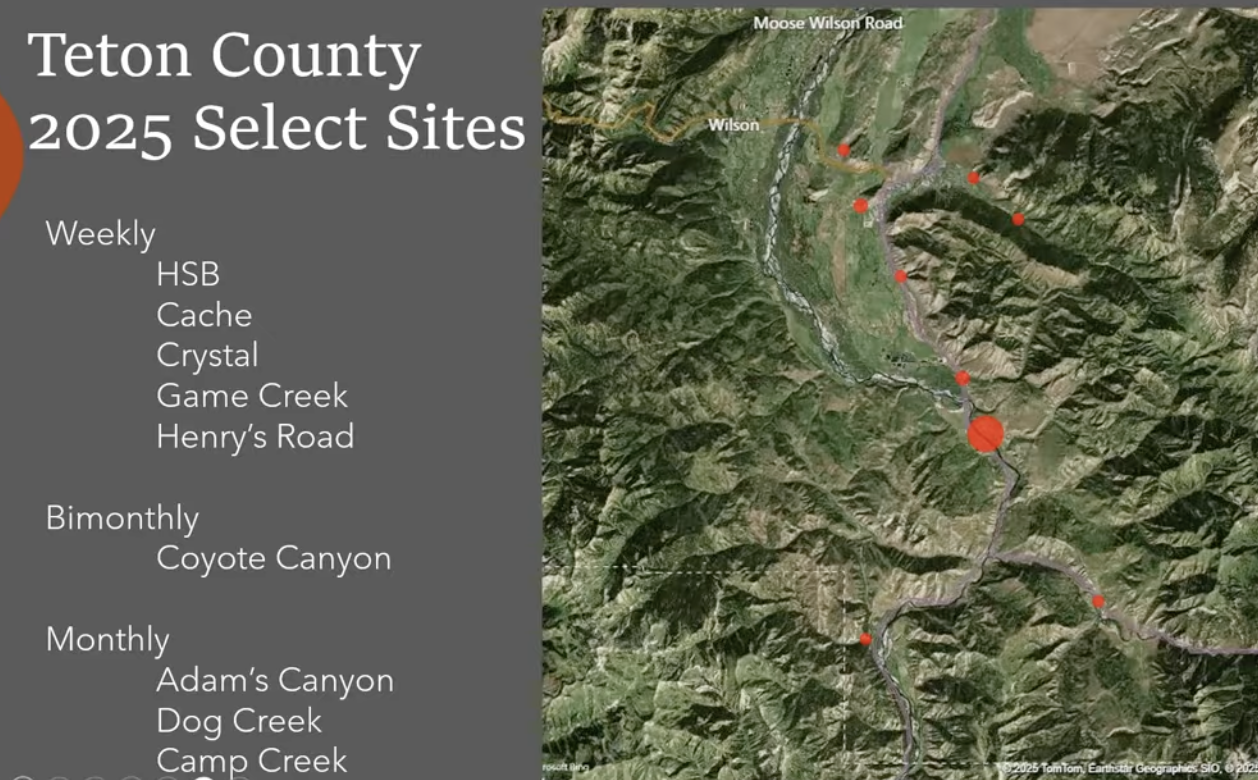
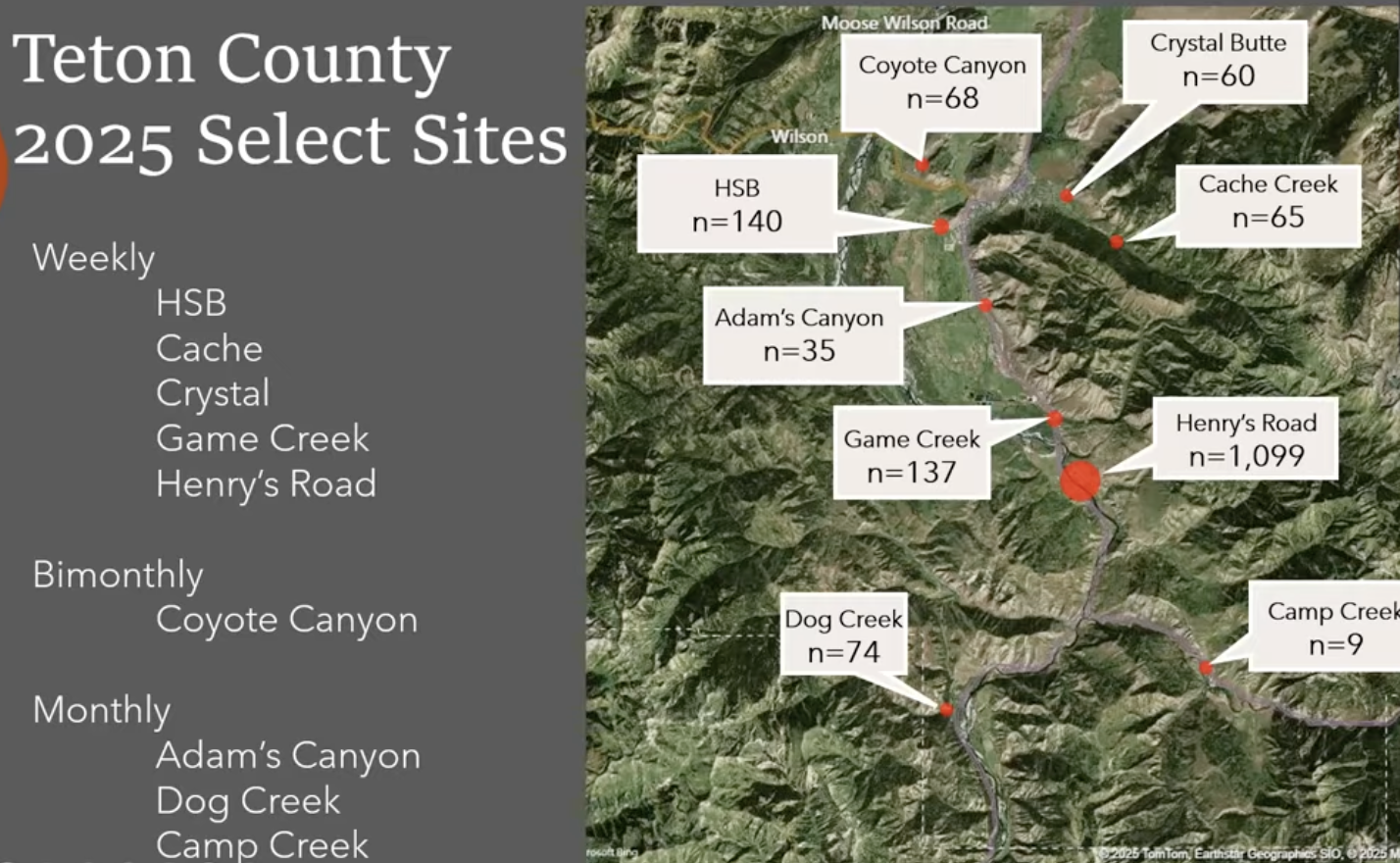
This map shows a few select sites that Kelsey and Mikenna found ticks at with weekly, twice monthly, and monthly site visits for active tick surveillance and number of ticks collected at each location.
Average Tick Densities (2025 Select Sites)
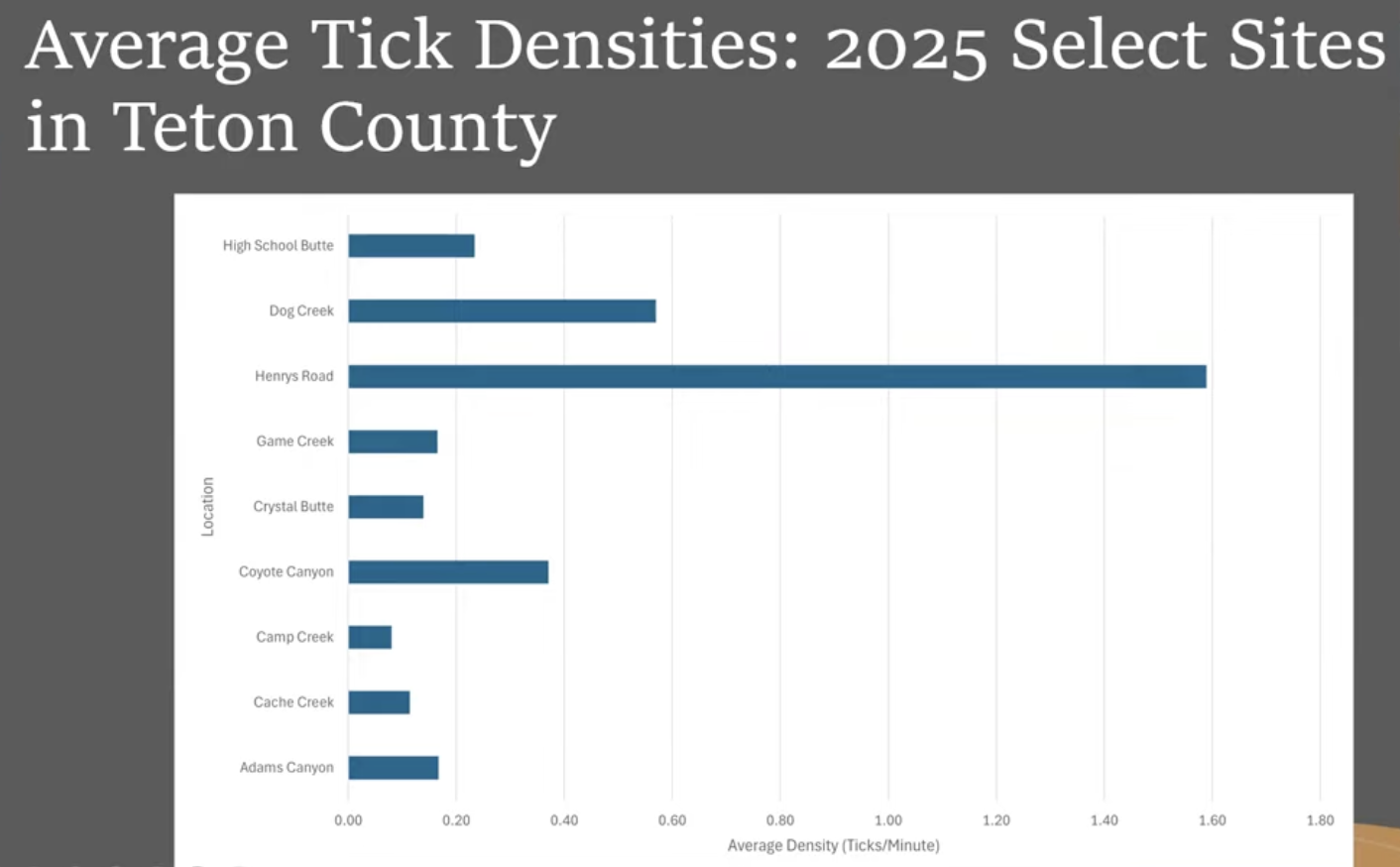
We want to quantify or characterize these locations by tick abundance per unit/time. We can switch gears and look at that as average density in terms of ticks per minute. This was a major goal for our program to find a surveillance strategy that worked for our habitat so we could say "Dog Creek has more ticks than High School Butte" we could, also, do this as infectious ticks per minute or per hour. We want to be able to quantify risk in terms of simply encountering a tick and also be able to quantify and counter risk for potentially infectious ticks. That was a major goal of our surveillance strategy that we chose.
Tick Species Totals (2023–2025)
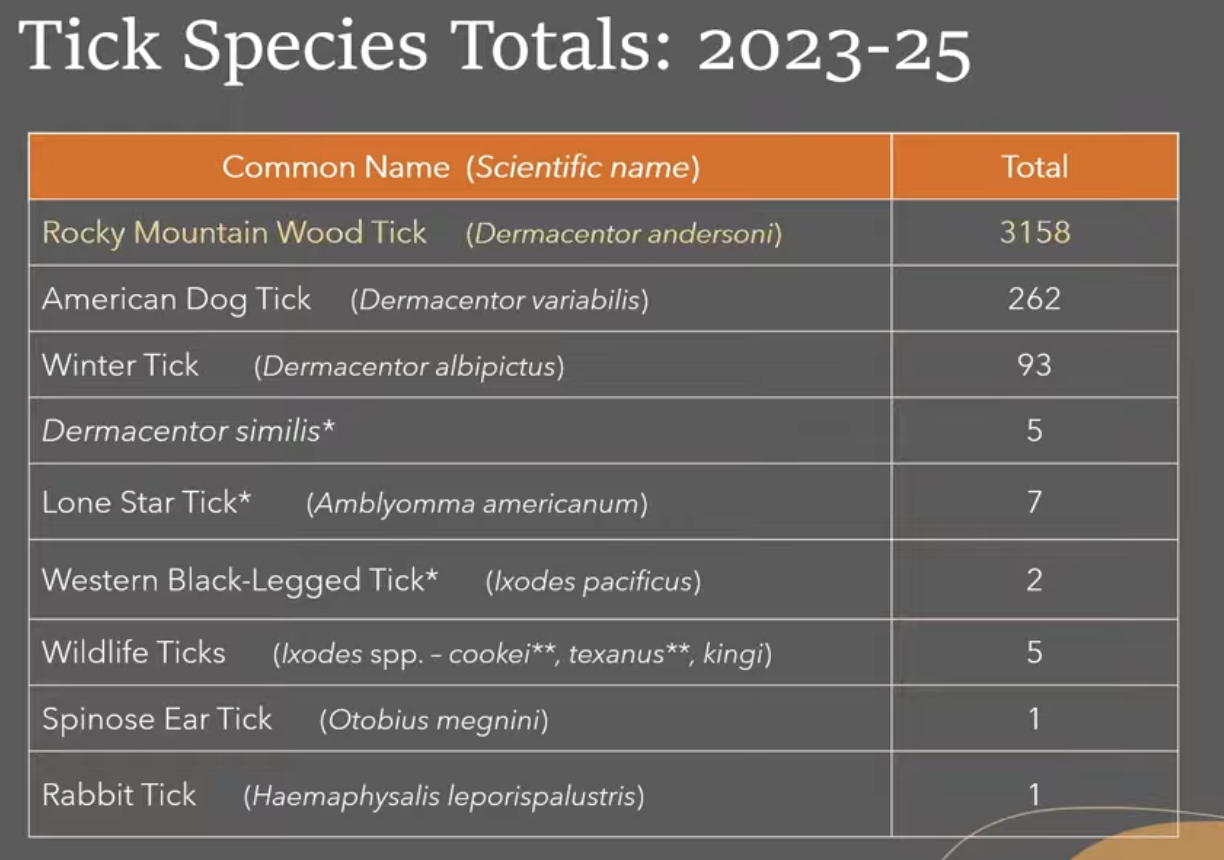
This is all of the years 2023-2025 combined together. Some of the species have one or two asterisks next to them. One asterisk - we knew it was an animal that was related to travel. Two asterisks we had no knowledge of the travel history. The American Dog Tick - while not nearly as many as the Dermacentor variabilis - there had never been record of the American Dog Tick until our data set proved that, for Sheridan and Platte County. I hope the Ixodes cookei was from outside of the area because we do not want that established here. The Spinose Ear Tick is the only soft tick our team has seen, while not medically significant, was really exciting.
American Dog Tick Distribution (2023–2025)
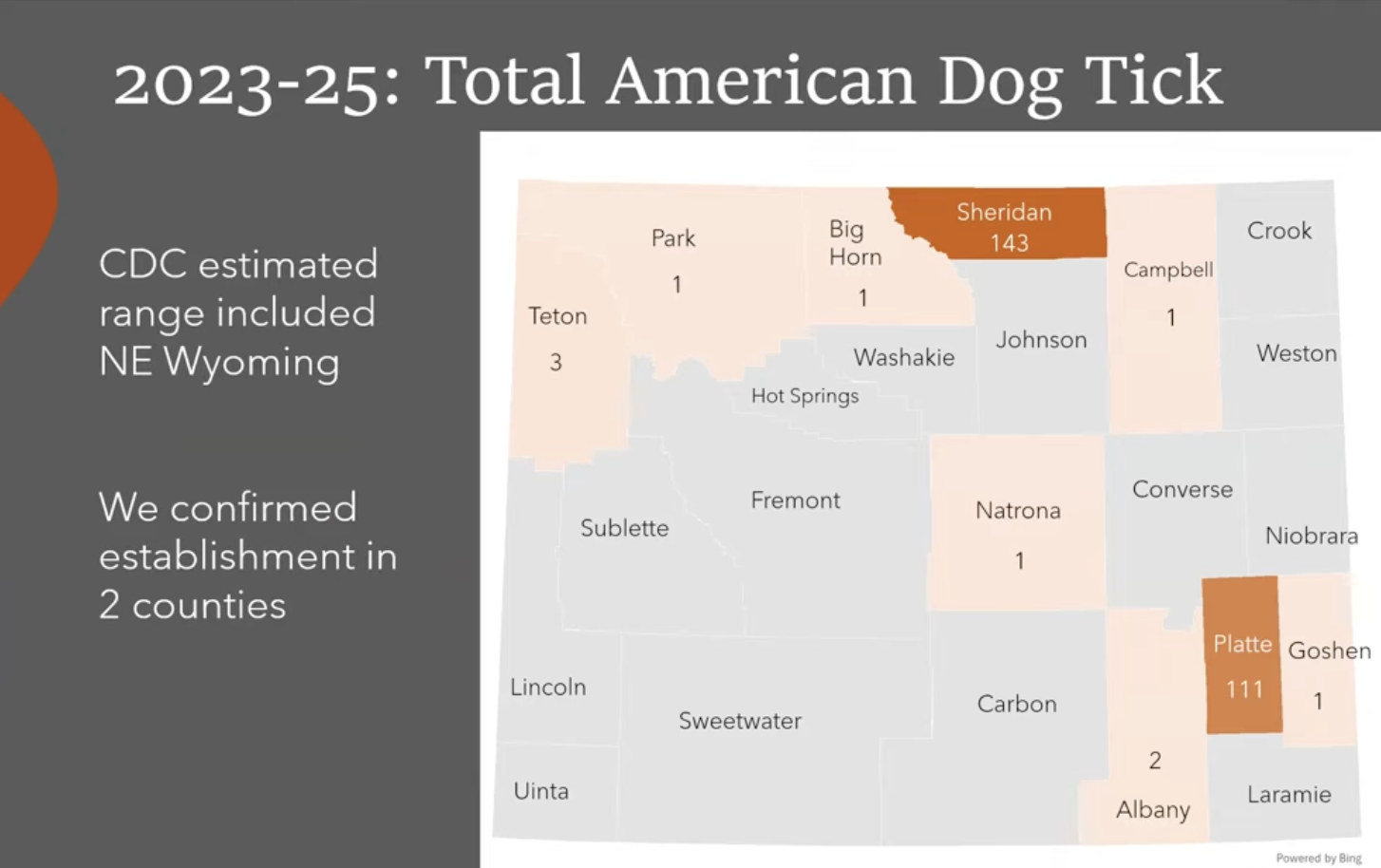
There had never been record of the American Dog Tick in Wyoming until our data set showed that. We were able to prove the American Dog Tick as established in Sheridan and Platte counties.
The CDC previously estimated the American dog tick's range to include northeastern Wyoming. Through our surveillance efforts, TCWP has now confirmed established populations in two Wyoming counties.
Pathogen Testing
One of the primary pathogens monitored through our surveillance program is Colorado Tick Fever Virus (CTFV).
CTFV is a member of the genus Coltivirus and is a non-enveloped, double-stranded RNA virus. Reservoir hosts include numerous small mammals, such as golden-mantled ground squirrels, Columbian ground squirrels, yellow-pine chipmunks, least chipmunks, deer mice, bushy-tailed woodrats, and porcupines. The virus is maintained in nature through persistent infections in these hosts and transstadial transmission within the Rocky Mountain wood tick (Dermacentor andersoni) life cycle.
CTFV Detection 2023-2025
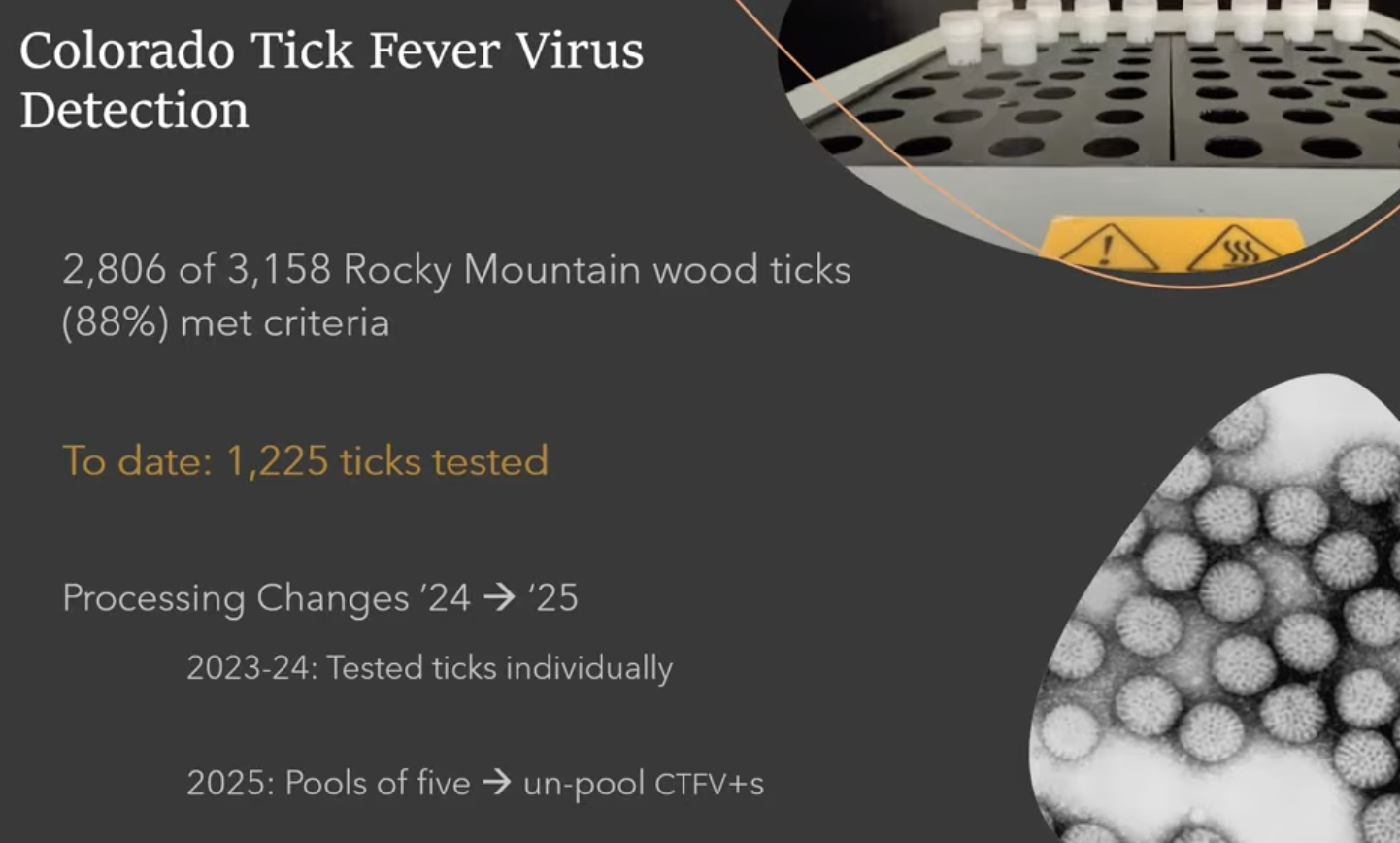
Over the past three years, TCWP has collected more than 3,100 Rocky Mountain wood ticks. Approximately 88% met the criteria for pathogen testing, and to date, 1,225 ticks have been tested.
Ticks are tested using RT-qPCR. Not every tick collected is eligible for testing. Current testing criteria include:
- Rocky Mountain wood ticks
- Live ticks
- Non-blood-fed ticks
- Specimens stored at -80°C
2023–2024 CTFV Positive Ticks
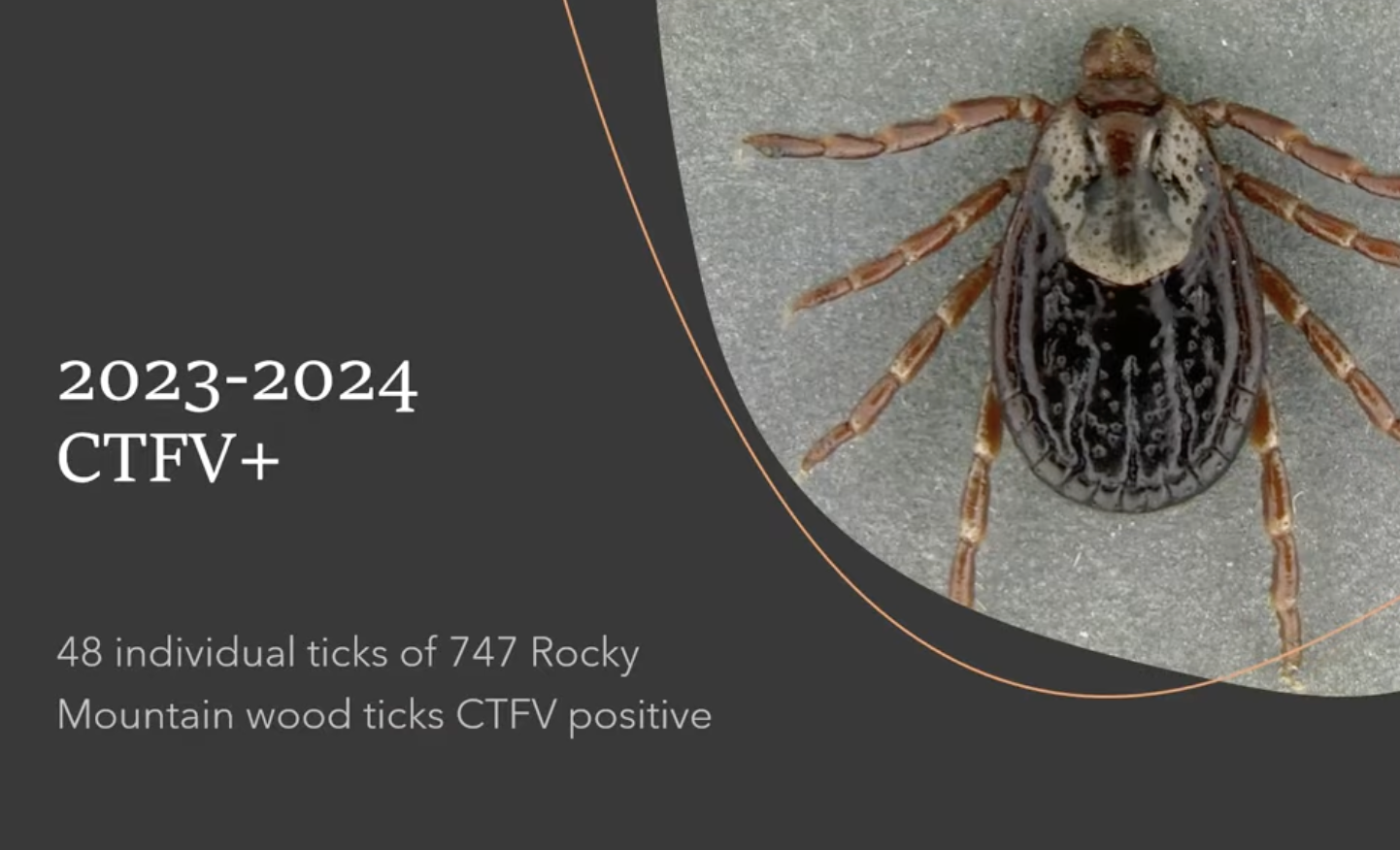
Between 2023 and 2024, 48 of the 757 Rocky Mountain wood ticks tested were positive for Colorado Tick Fever Virus. The accompanying map illustrates the county-level distribution of positive ticks.
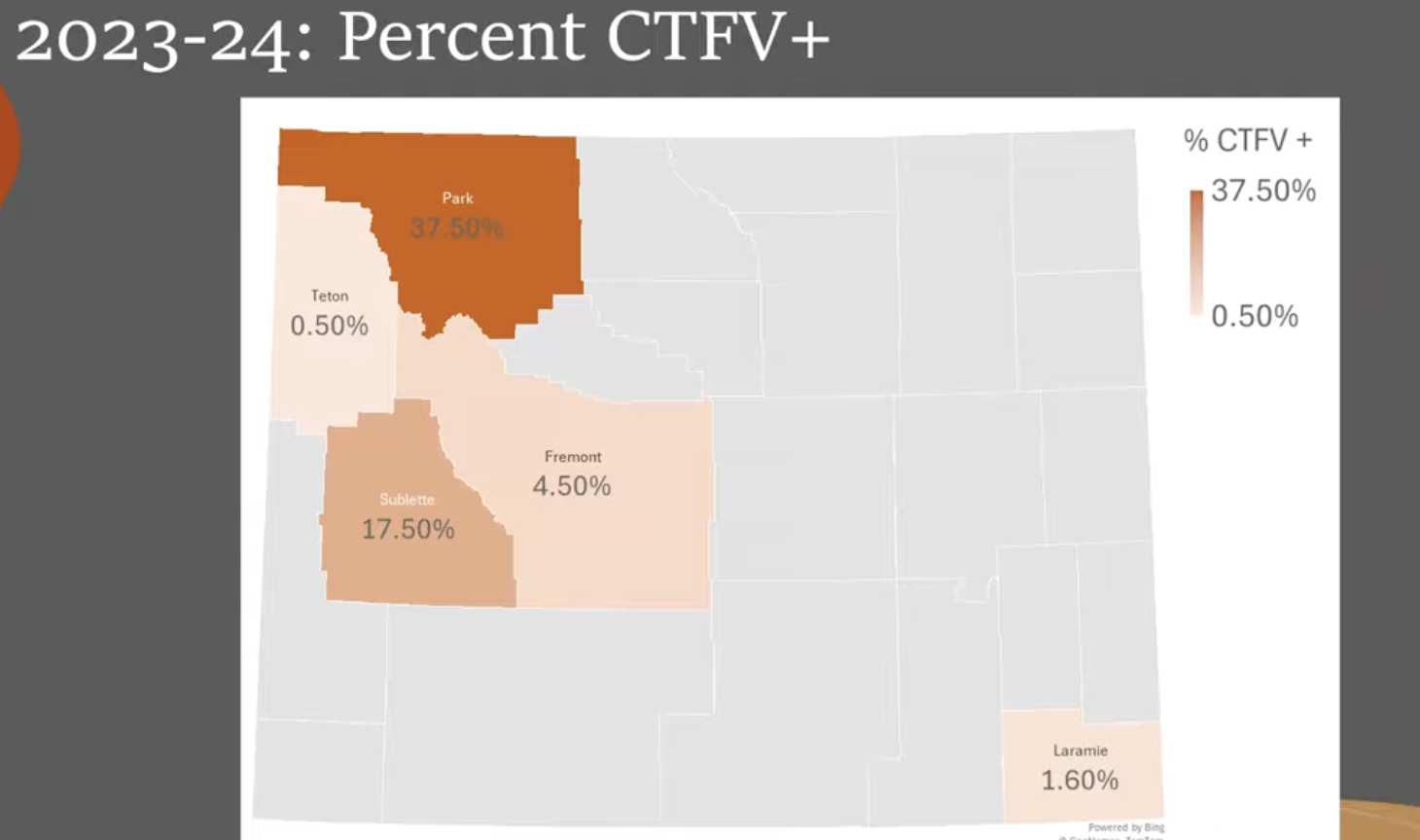
As surveillance continues, we hope to better understand whether Colorado Tick Fever Virus occurs in localized hotspots or is more broadly distributed throughout Wyoming. Additional sampling will provide greater resolution and help answer these important questions.
2025 CTFV Positive Ticks
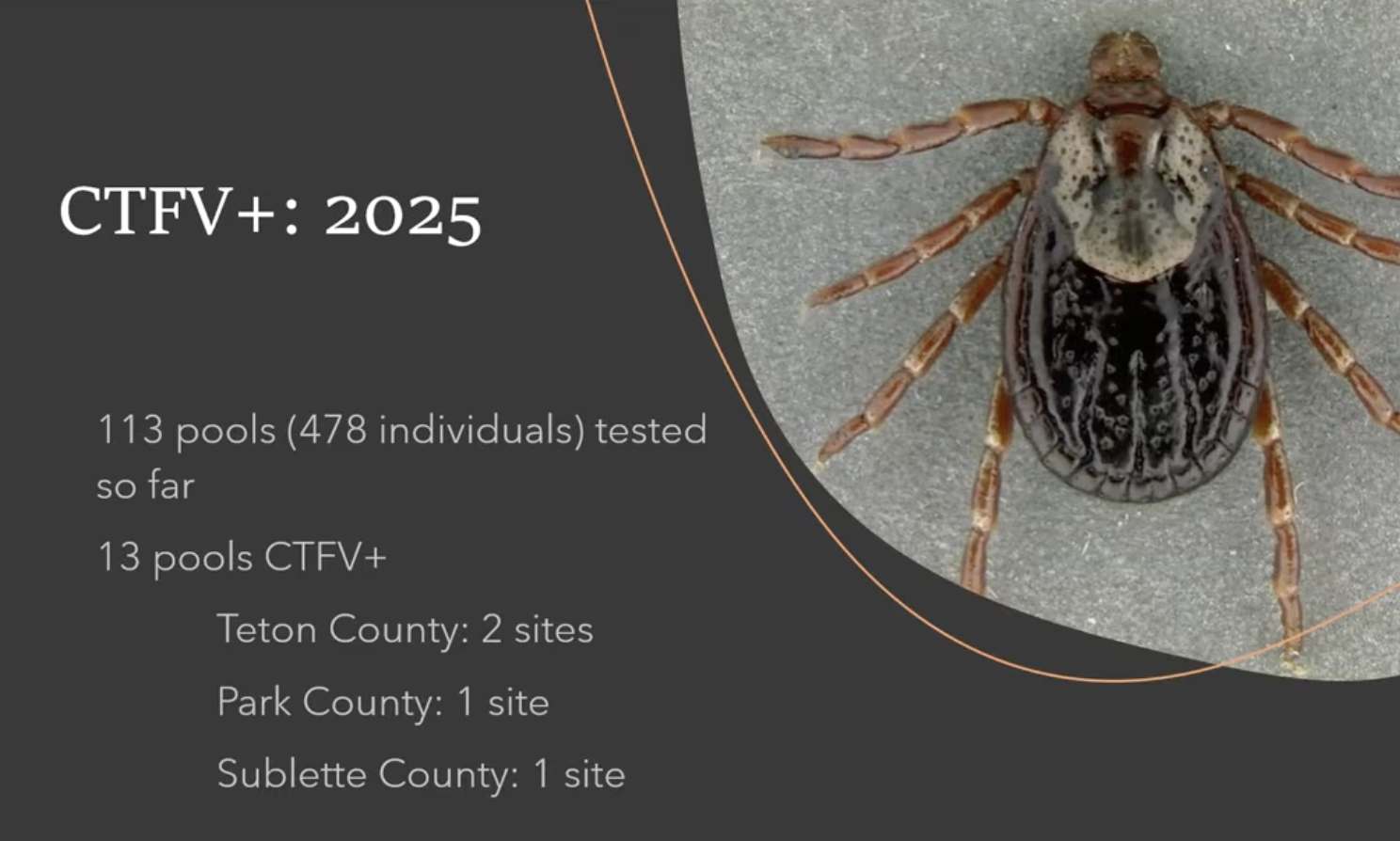
As of this presentation in 2025:
- 113 pools (478 individual ticks) were tested.
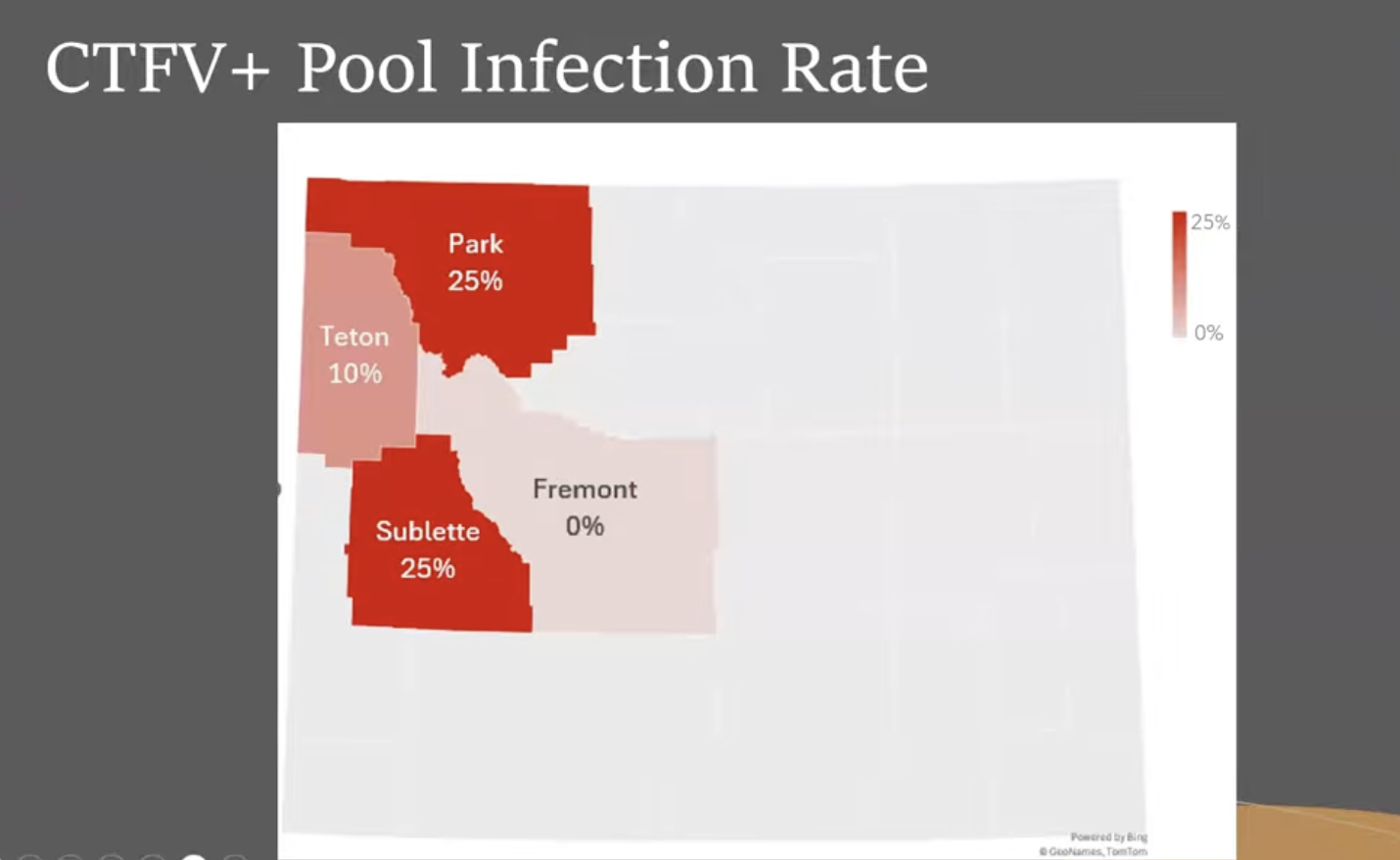
- 13 pools tested positive for CTFV.
Positive pools identified in:
- Teton County (2 sites)
- Park County (1 site)
- Sublette County (1 site)
Program Research Questions & Goals
Since its inception, the Tick Surveillance Program has focused on answering several key questions:
- What tick species are present in Wyoming?
- Is the range expansion of non-native tick species occurring in Wyoming?
- What pathogens are Wyoming ticks carrying?
- How can we effectively communicate tick-borne disease risks to the public?
Ticks of Medical Significance in Wyoming
- Rocky Mountain Wood Tick (Dermacentor andersoni) – Vector of Colorado Tick Fever Virus, Rocky Mountain spotted fever, tularemia, Q fever, and tick paralysis.
- Brown Dog Tick (Rhipicephalus sanguineus) – Vector of Rocky Mountain spotted fever, Q fever, and canine ehrlichiosis.
- Soft Ticks (Ornithodoros parkeri and Ornithodoros hermsi) – Vectors of tick-borne relapsing fever.
- American Dog Tick (Dermacentor variabilis) – Vector of Rocky Mountain spotted fever, tularemia, Q fever, bovine anaplasmosis, and tick paralysis.
Ongoing Collaborations
Current collaborative research efforts include:
- Viral isolation from Colorado Tick Fever Virus-positive ticks.
- Expanded pathogen testing in partnership with Wyoming Public Health using the Illumina Viral Surveillance Panel which screens for over 200 pathogens to improve pathogen detection and characterization.
Current Research Questions & Future Goals
As the program continues to grow, TCWP is working to answer additional questions, including:
- What are the community's knowledge, attitudes, and practices regarding ticks and tick-borne diseases?
- What are the most effective communication strategies for informing the public about tick-borne disease risk?
- How can we continue to increase participation in Wyoming's Tick Surveillance Program?
- How can we better address common misconceptions surrounding ticks and tick-borne diseases?
Interested in learning more? Watch the presentation in full from Youtube at this link to hear directly from our researchers.