Our Tick Program Informs Public Health
TCWP established its tick program in 2023 to address an important gap in Wyoming’s public health knowledge.
Historically, tick surveillance and research in Wyoming had been very limited. This knowledge gap became increasingly concerning as national surveillance documented a growing burden of tick-borne disease and the expansion of medically important ticks into new areas. This highlighted the need for long-term surveillance in Wyoming to understand our own local risk.
Although TCWP initiated, leads, and coordinates this tick program, its statewide reach is highly collaborative. Grant funding has supported work outside of Teton County, while other researchers, mosquito control districts, Weed & Pest districts, veterinarians, collaborating organizations, citizen scientists, and members of the public have contributed ticks and collection data from across Wyoming.
These collaborative efforts are building the Wyoming-specific information needed to:
- Identify local tick species abundance and distribution
- Understand where and when people encounter ticks
- Detect locally relevant pathogens
- Track changes in tick populations and public health risk
Surveillance
The first step towards understanding tick-borne disease risk to the public is conducting tick surveillance, which involves systematically collecting information such as:
- Where and when ticks are found
- How abundant they are
- Which tick species are present
- Which habitats and environmental conditions are associated with them
- Whether ticks are infected with viruses or bacteria that may cause disease
Over time, these data help us identify patterns in tick activity, compare locations and years, guide pathogen testing, and provide locally relevant tick-borne disease risk information to the public.
TCWP uses multiple types of surveillance to learn about ticks in Wyoming. Surveillance begins in early spring and continues throughout the summer while ticks are most active. Our program uses two major types of surveillance: active and passive.
Active Surveillance
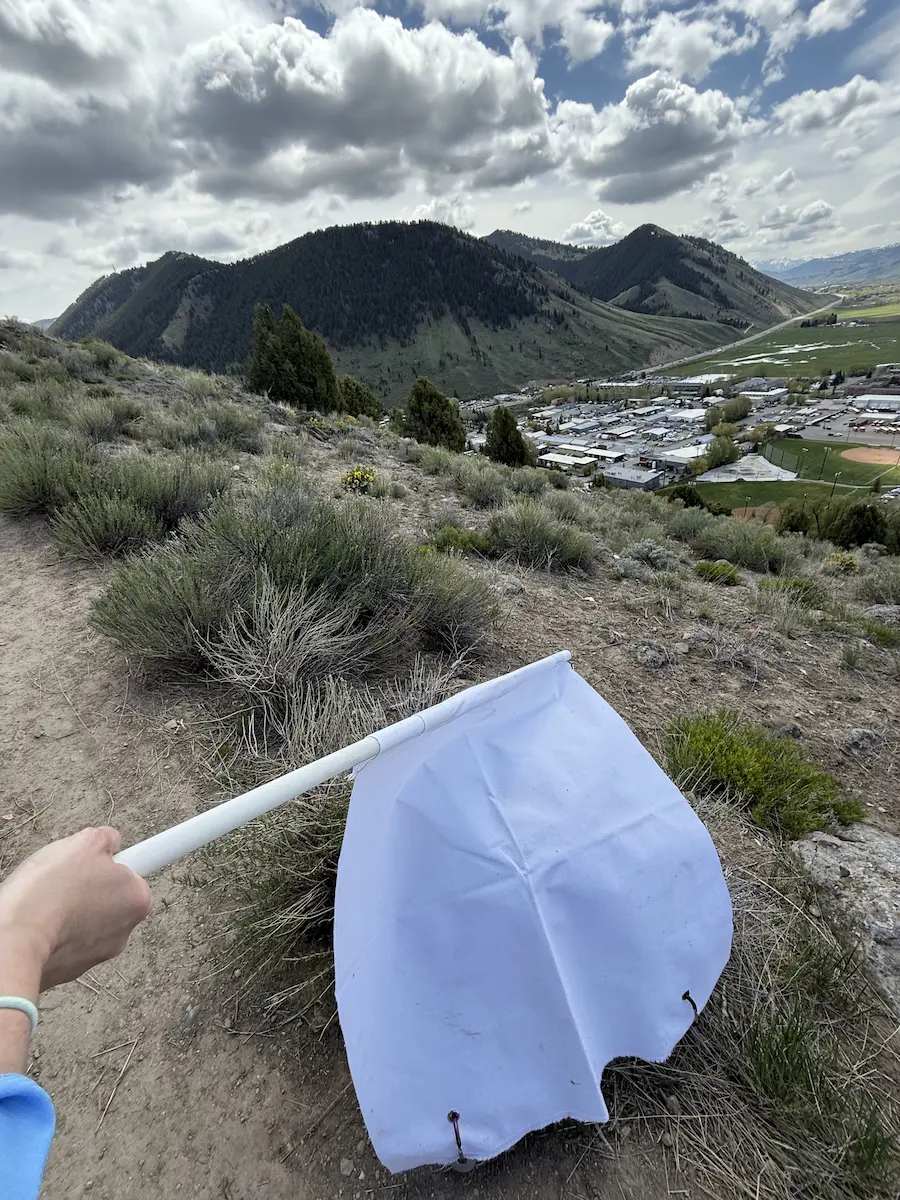
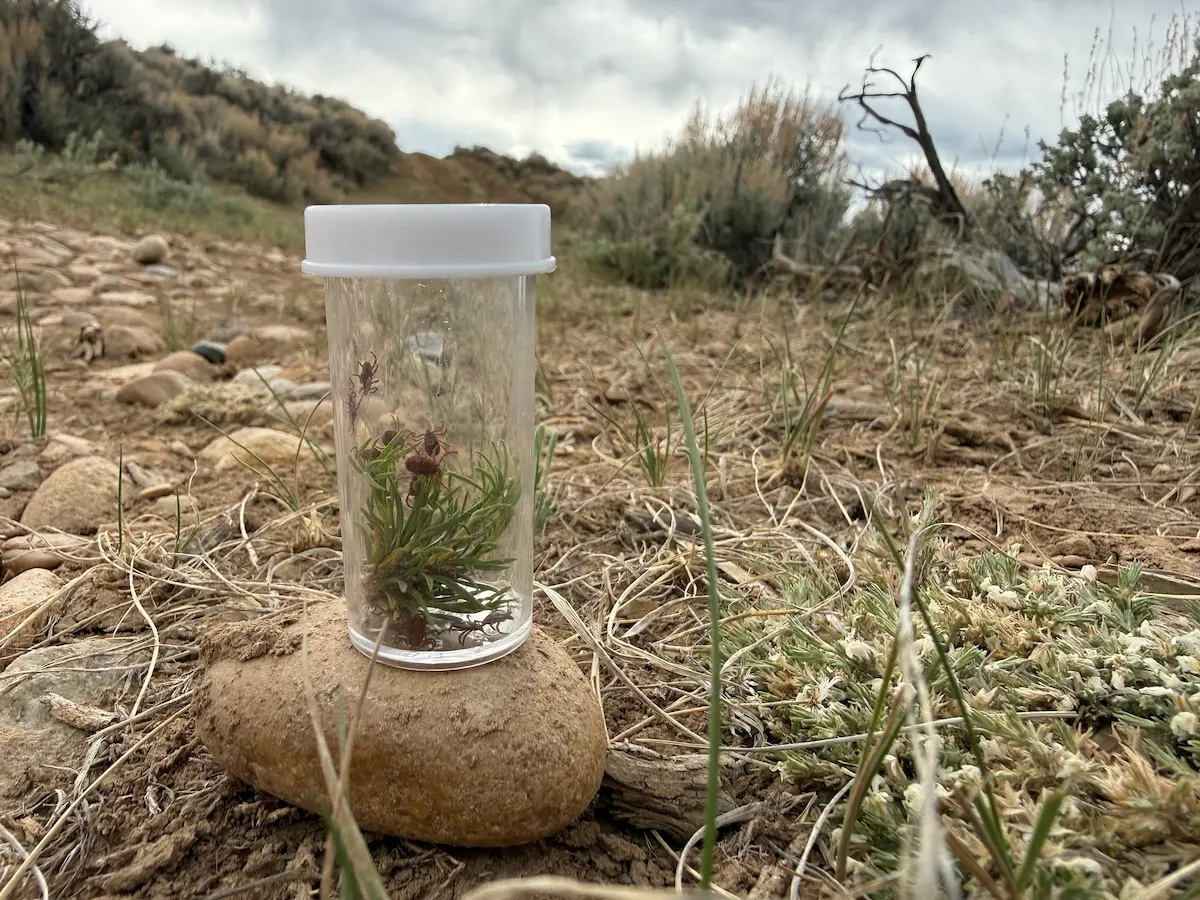
Active surveillance is conducted by TCWP staff, collaborating organizations, and trained citizen scientists. Surveyors visit suitable tick habitat and actively collect ticks using established sampling methods.
All surveyors follow standardized methods so that all of the information is recorded consistently. Standardization allows us to meaningfully compare tick activity among locations, across seasons, and from year to year.
Passive Surveillance

Passive surveillance relies on members of the public submitting ticks they have encountered. These submissions help document which tick species people and animals are encountering, as well as where and when those encounters occur. They can also help us detect unusual or less commonly collected species.
TCWP accepts ticks from the public for identification and information services only. We do not test ticks removed from people or animals for disease-causing pathogens, but we can identify them to species and provide information about associated pathogens.
Ticks may be mailed to TCWP or dropped off at our office in Jackson. Public submissions have become a popular and valuable part of the program, allowing community members throughout the region to contribute directly to our growing surveillance dataset.
Learn more about submitting a tick to us: Submit a Tick for Identification
Become a Citizen Scientist
If you are interested in helping TCWP conduct active field surveillance for ticks, please reach out. Citizen Scientists will receive training on surveillance protocols and are expected to conduct several surveys throughout the season.
While ticks and tick-borne diseases are widely studied in the eastern United States, little is known about them in the Rocky Mountain states. Previous studies indicate that Teton and Sublette Counties have high rates of Colorado Tick Fever Virus in our resident ticks. However, widespread and long-term surveillance has been lacking in our area.
TCWP officially launched a tick surveillance program in 2024 with the goal of better understanding tick species diversity and distribution and the prevalence of tick-borne diseases in Teton County and Wyoming.
While the submissions from the passive program mentioned above are incredibly impactful, additional active surveillance is essential to further understand which tick species are present and what pathogens they may carry.
Citizen Scientists must be willing to do the following:
- Sign at TCWP volunteer release and waiver of liability
- Be 18 years of age or older
- Be willing to return any collected ticks to TCWP within a few days of collection and return the collection materials at the end of the season.
- Be physically able to hike/walk on hillsides/trails, bend over or crouch down, and carry a lightweight pack (less than 10 pounds)
- Be willing to participate in training
To join us, please reach out to the staff entomologist, Mikenna Smith at msmith@tcweed.org
Pathogen Testing
Ticks can carry pathogens, like viruses and bacteria, that can be transmitted to humans and pets during a tick bite. These pathogens can be identified with laboratory testing. Knowing which pathogens are found in local tick populations can help residents, visitors and physicians make informed decisions about tick-borne disease risk.
Testing ticks for pathogens helps provide locally relevant information like:
- Which pathogens and tick-borne diseases can be transmitted locally
- How common specific pathogens are in local tick populations
- Where and when infectious ticks are most likely to be encountered
What pathogens does TCWP test for?
The TCWP laboratory currently tests ticks for Colorado Tick Fever Virus and a bacteria called Rickettsia rickettsii which causes Rocky Mountain Spotted Fever. Read more about these illnesses here. We are continuously working to expand the pathogens we are able to detect in our lab tests. Up-to-date pathogen detection information can be found on our Tick Data Dashboard.
The TCWP lab is not a medical diagnostic lab and can not test ticks that have bitten a human or a pet. For more information on why, visit this page.
How does TCWP test ticks?
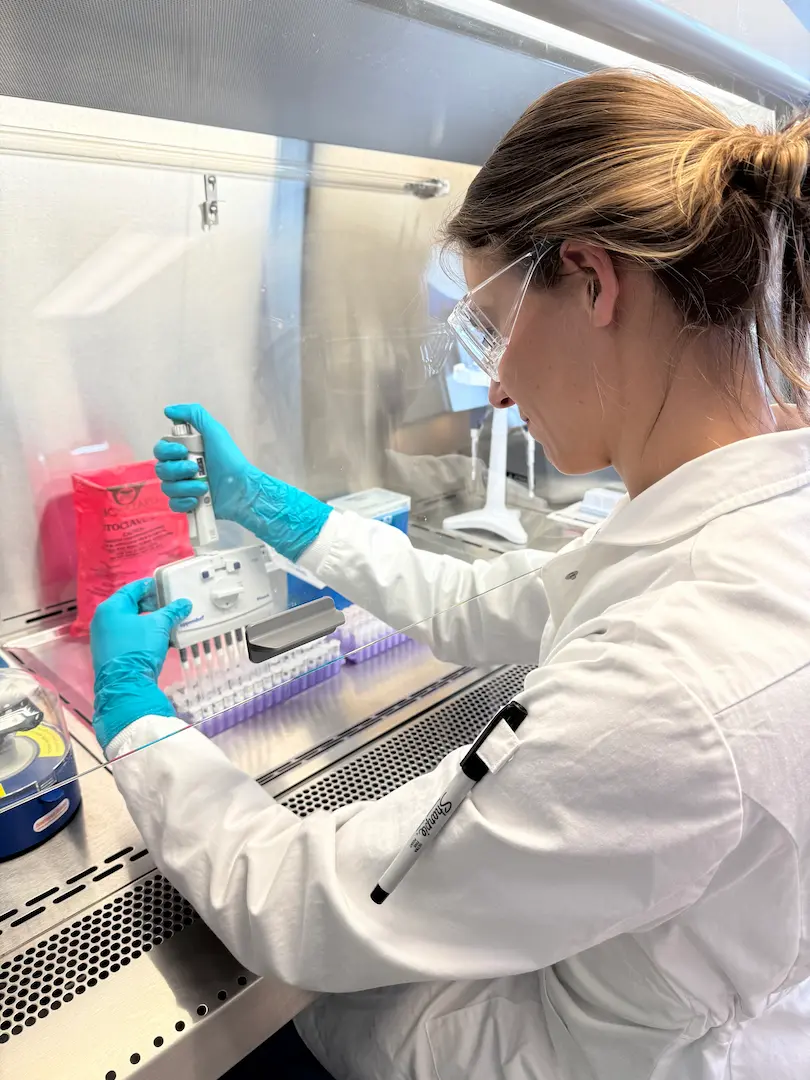
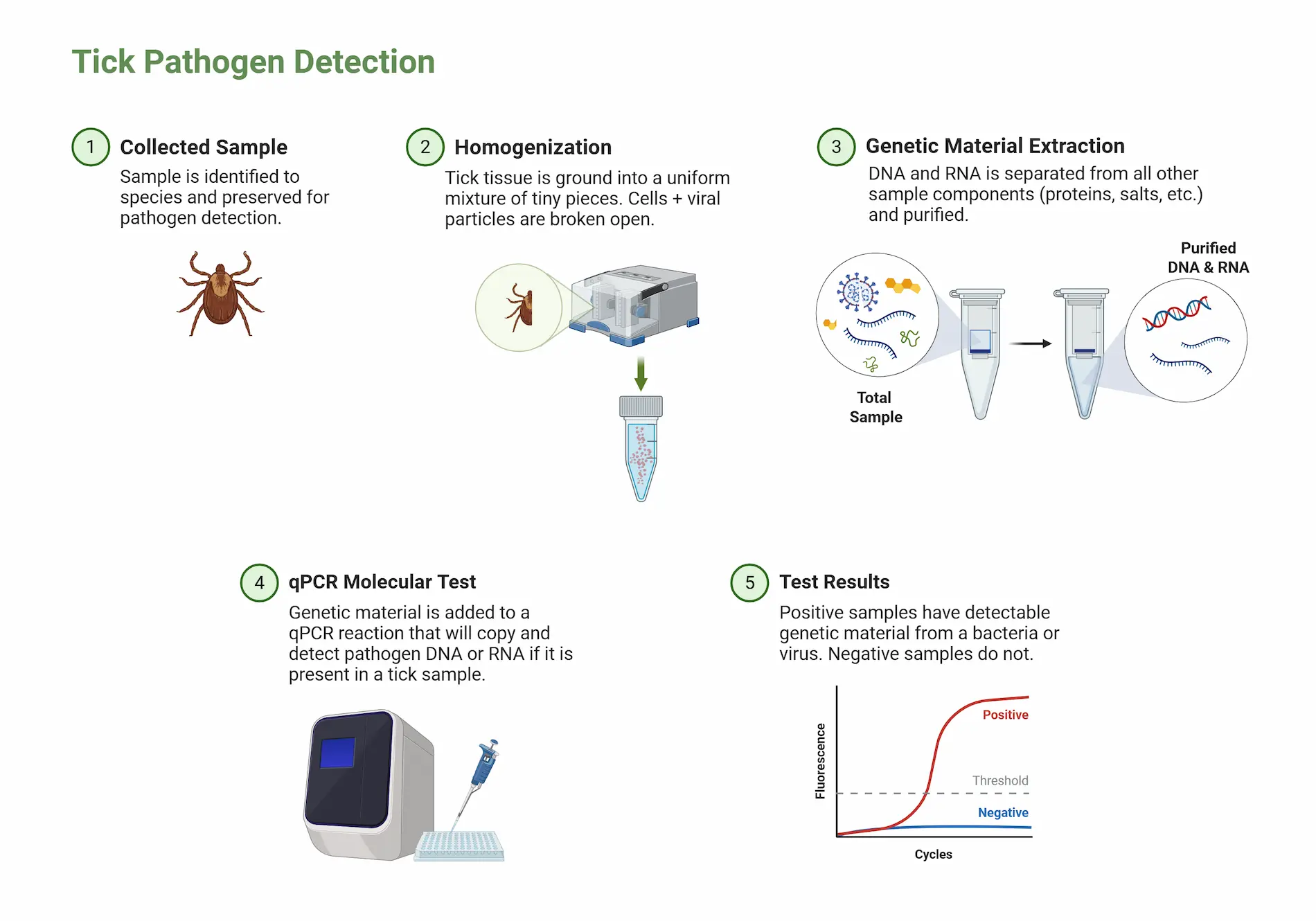
The TCWP laboratory uses molecular techniques to test ticks collected from the environment for various pathogens. All bacteria and viruses contain genetic material (DNA and RNA). After extracting that genetic material from ticks, we use a technique called quantitative PCR (qPCR) to detect genetic signatures specific to our pathogens of interest. Quantitative PCR is very sensitive and precise and is the gold standard of pathogen detection.