
A Nose for Noxious Weeds: Working Dogs for Conservation
We here at TCWP might have a great nose for invasive weeds, but we’ll never top the tenacious pups at Working Dogs for Conservation.
This Montana-based nonprofit trains dogs to help protect wildlife and wild places by detecting things humans might miss, including invasive plants, wildlife diseases, and evidence of wildlife crime.
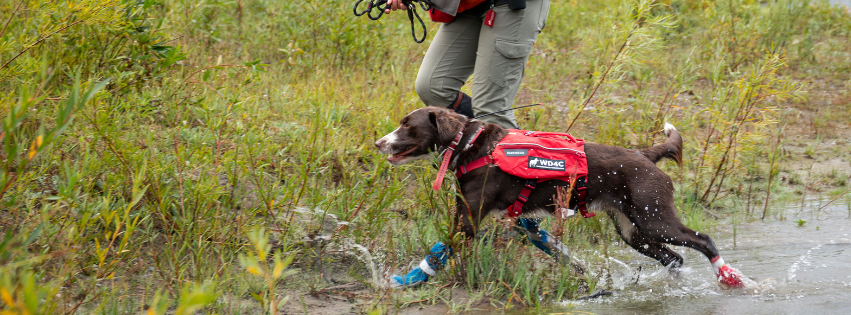
In Teton County, their skills have become part of an especially important part of our early detection program. With their paws and noses to the ground, these weed sniffing dogs (no, not those kind) are hard at work protecting places like Snake River from invasive plants.
Finding New Life in Protecting Landscapes
Working Dogs for Conservation, or WD4C, takes high-energy dogs and turns their drive into conservation work. Hailing from shelters, rescues, or other “career” paths, these dogs put their natural-born skills to work protecting our lands. These dogs are trained to detect target scents and communicate with their handlers when they find them, helping us map their spread and target any patches or infestations for removal.
Instead of tearing up shoes or tearing through living rooms, they’re helping us tear up weeds!
Why the Snake River?
The Snake River is one of Teton County’s most important natural corridors, supporting wildlife, recreation, and the health of our valley. It also happens to be a place where certain invasive plants, like saltcedar and perennial pepperweed, can cause big problems if they get established.
TCWP and the Jackson Hole Weed Management Association launched the Snake River Project after saltcedar was found along the river in 2001. Since then, crews have searched islands, gravel bars, and riverbanks for high-priority species like saltcedar and perennial pepperweed.
We’ve done a good job fighting back, but as infestations get smaller and more scattered, they also get harder for people to find. That’s where our four-legged friends come in.
How the Dogs Help
In 2019, TCWP partnered with Working Dogs for Conservation to see whether trained dog-and-handler teams could help locate remaining invasive plant populations along the Snake River. The program was a smash hit!
In partnership with TCWP’s Early Detection and Rapid Response program, canine-handler teams find about 30% more invasive plant locations on average over human teams alone. For a program focused on finding seed sources of priority invasive species before they grow into bigger infestations, that is nothing to sniff at.
What This Work Makes Possible
The goal is simple: find invasive plants early, remove them quickly, and keep the Snake River’s native plant communities intact. Working Dogs for Conservation helps TCWP and local partners search more effectively in places where invasive plants can hide in plain sight.
Their hard work is a great reminder of all the different forms conservation work takes: from lab testing to mapping, to sprinting on all fours with tails wagging.
And, while most of us probably don’t have super noses, we can still help protect Teton County’s waterways by keeping an eye out, cleaning our boots and gear, and reporting suspicious plants when we see them!
You can do your part to protect the Snake River from invasive species by remembering to PlayCleanGo:
- Clean, Drain, and Dry your watercraft, including rafts and kayaks.
- Remove mud and debris from your clothing and gear.
- Join WYLD Watch and report invasive species through EDDMaps or at tcweed.org