
Life Cycle & Behavior
Ticks are arachnids, meaning they are more closely related to spiders and mites than to insects. There are two major groups of ticks in the United States: hard ticks and soft ticks. Hard ticks have a hardened shield on their backs that soft ticks lack.
Hard ticks develop through four life stages: egg, larva, nymph, and adult.
Ticks require blood meals to grow between life stages and reproduce. Most medically significant hard ticks in the United States are three-host ticks, meaning the larva, nymph, and adult each feed on a different host. After feeding, the tick typically drops from its host and continues developing in the environment before seeking another host.
When a tick is ready for another blood meal, it exhibits a behavior called questing. A questing tick climbs vegetation, such as grasses or brush, and extends its front legs while waiting for a host to pass by. When a person or animal brushes against the vegetation, the tick grabs on and begins looking for a place to bite. Ticks do not fly or jump.
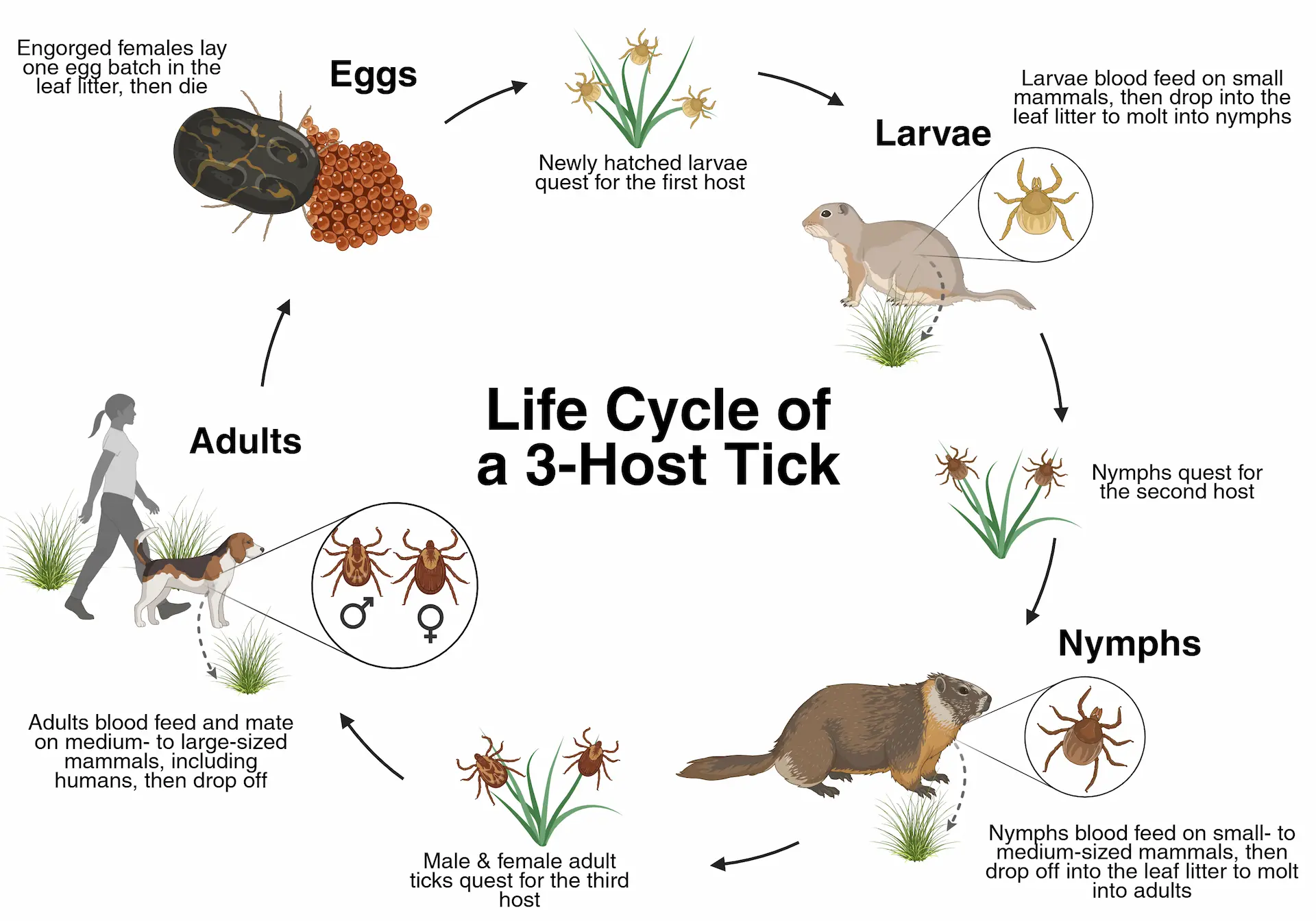
Click on each stage of the hard tick life cycle below to learn more.
Eggs
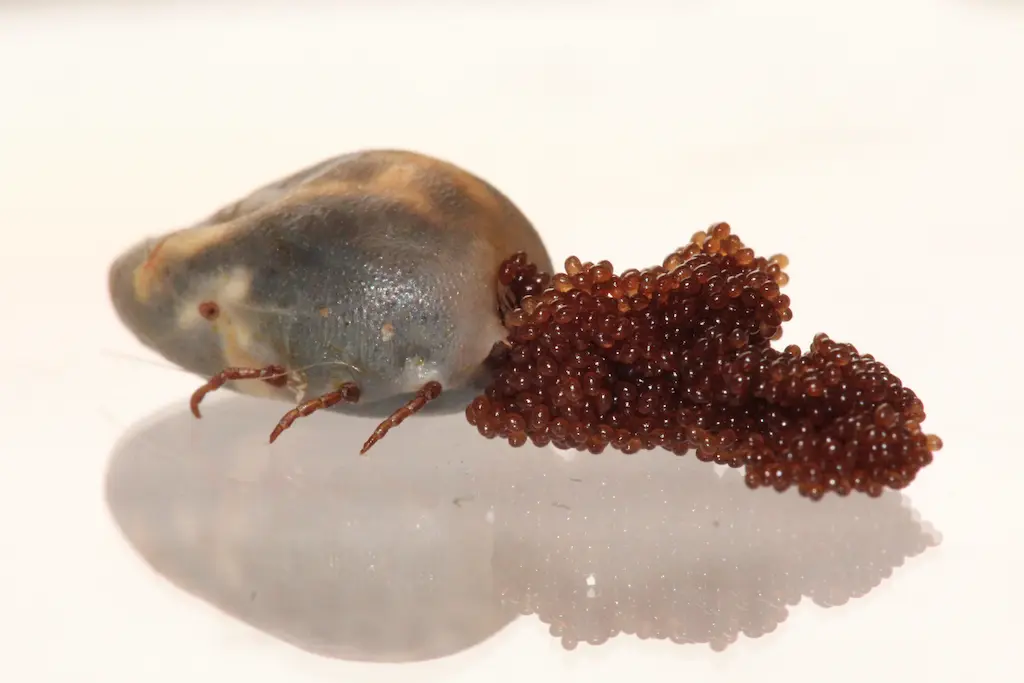
The tick life cycle begins when a blood-fed adult female drops off a host to lay a large cluster of eggs in a protected location in the environment. The most important human-biting female ticks in Wyoming will lay thousands of eggs.
The female dies after laying her eggs. The eggs hatch into tiny six-legged larvae in late summer before overwintering.
Larvae
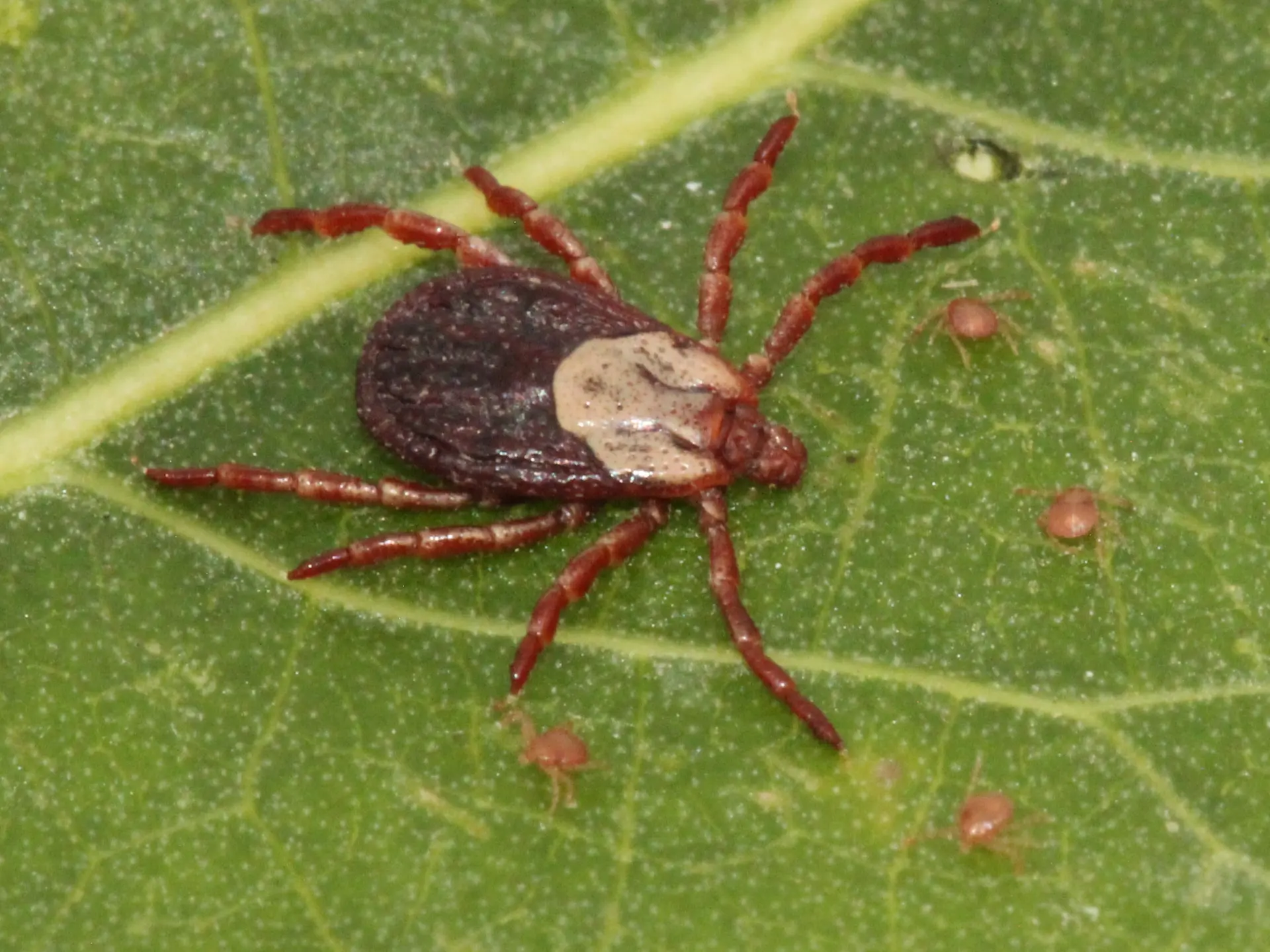
Larvae are the smallest active life stage of a tick and are sometimes called seed ticks because of their extremely small size. Unlike nymphs and adults, tick larvae have only six legs.
In Wyoming, larvae will typically emerge from overwintering in early June to seek a host and take their first blood meal. Larvae quest for a host low to the ground and typically feed on small mammals such as mice or squirrels in Wyoming. These blood meals from small mammals are often where a tick initially becomes infected with a pathogen that can later be transmitted to humans.
Once feeding is complete, the engorged larva drops from its host and eventually molts into an eight-legged nymph.
Nymphs
.webp)
Nymphs resemble very small adult ticks and have eight legs. Like larvae, they must find a host and take a blood meal before they can continue developing. In Wyoming, nymphs also tend to bite smaller mammals. These blood meals from small mammals are often where a tick initially becomes infected with a pathogen that can later be transmitted to humans.
In Wyoming, overwintered nymphs will appear in April to find a host. After feeding, the engorged nymph drops from its host and molts into an adult.
Adults
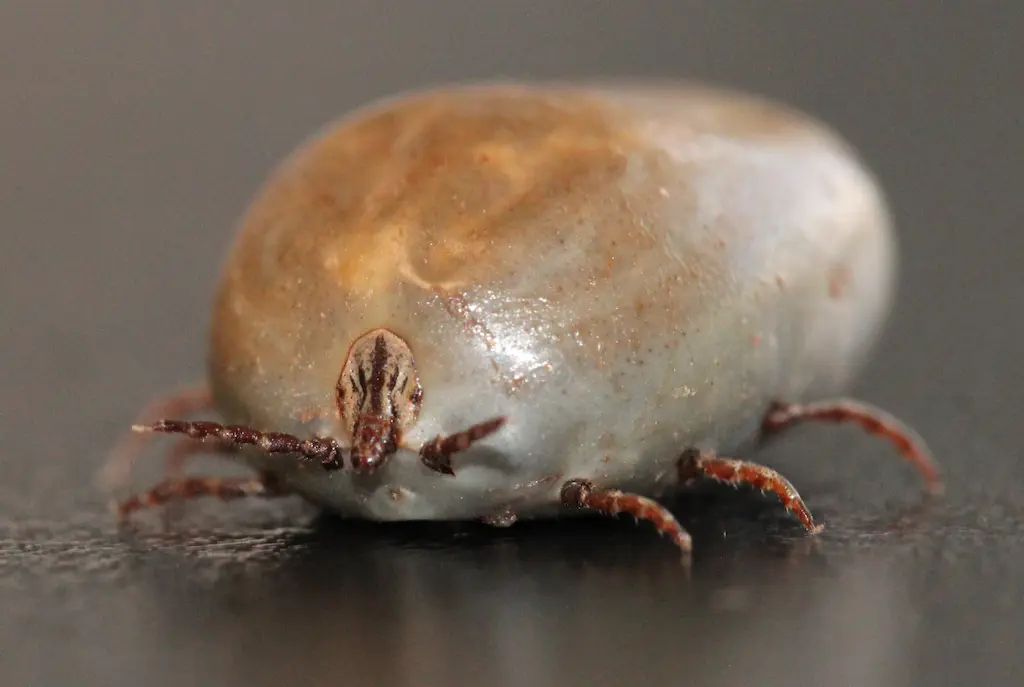
Adult ticks are the final stage of the tick life cycle. In Wyoming, adult males and females seek large mammal hosts, such as elk, deer, or humans, and mating occurs on the host. Because it is most often adult ticks that are biting humans in Wyoming, it is this life stage that is responsible for transmitting tick-borne pathogens to people.
Female hard ticks can greatly increase in size while feeding as their bodies expand to accommodate a large blood meal. Once fully engorged, a female drops from the host and finds a protected location to lay her eggs, beginning the life cycle again.
Adult males generally take smaller blood meals than females and do not become dramatically engorged.
Tick Behavior
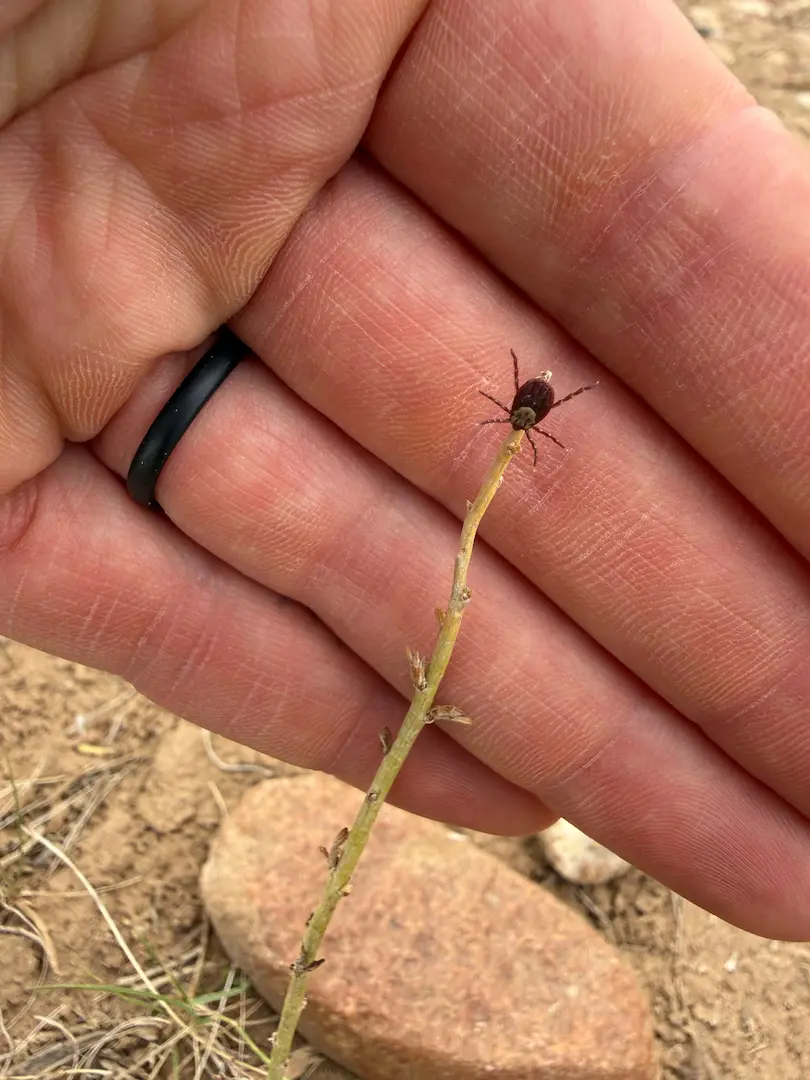
Ticks cannot fly or jump. They usually encounter hosts through a behavior called questing.
When questing, a tick climbs vegetation and extends multiple pairs of legs while waiting for a suitable host to pass nearby. When a person or animal brushes against the vegetation, the tick can grab onto the host and begin crawling in search of a place to attach and feed.
Ticks detect potential hosts using cues such as body heat, movement, odors, and carbon dioxide.
Ticks must also avoid drying out. Temperature, humidity, sunlight, wind, and vegetation can influence when and where ticks are active. A tick may move between exposed vegetation used for host seeking and more humid areas closer to the soil where it can conserve moisture.
Local Ticks
Wyoming is home to several tick species that differ in their abundance, habitat, host preferences, and importance to human or animal health. Some commonly bite people and can transmit pathogens, while others primarily feed on wildlife, livestock, or companion animals.
The Rocky Mountain wood tick (Dermacentor andersoni) is Wyoming’s most common and widespread medically significant tick. It can transmit Colorado tick fever virus, Rickettsia rickettsii, which causes Rocky Mountain spotted fever, and Francisella tularensis, which causes tularemia. It can also cause tick paralysis.
The American dog tick (Dermacentor variabilis) is another medically significant species found in parts of Wyoming. Surveillance records have confirmed established populations in Sheridan and Platte counties. Like the Rocky Mountain wood tick, it can transmit the bacteria that cause Rocky Mountain spotted fever and tularemia and can cause tick paralysis.
The brown dog tick (Rhipicephalus sanguineus) occurs worldwide and is closely associated with domestic dogs and human-built environments, particularly homes and kennels. It can transmit Rickettsia rickettsii, the bacterium that causes Rocky Mountain spotted fever. Encounters with this tick species are uncommon in Wyoming.
Other species documented through Wyoming’s surveillance program include the winter tick (Dermacentor albipictus), rabbit tick (Haemaphysalis leporispalustris), rotund tick (Ixodes kingi), raccoon tick (Ixodes texanus), and spinose ear tick (Otobius megnini). These ticks primarily feed on wildlife, livestock, or companion animals and rarely bite people, if at all.
Tick distributions can change over time. Ongoing surveillance helps us determine which species are present, where and when they are active, and whether their distributions are changing.
Tick Habitats
Ticks can occur in many different habitats, and the habitat preferred by a tick depends strongly on the species. Suitable tick habitat must provide both appropriate environmental conditions and access to animals the ticks can feed upon.
In Wyoming, ticks can be encountered in habitats including sagebrush, grasslands, shrublands, forest edges, foothills, riparian areas, and other places used by wildlife and livestock. Ticks are often associated with vegetation or landscape features where hosts regularly travel or rest.
Tick abundance can vary substantially even across short distances. Vegetation, moisture, elevation, slope, aspect, wildlife activity, and weather can all influence whether ticks are present and how active they are.
Ticks also have distinct seasonal activity patterns. Some species or life stages may be active primarily in spring and early summer, while others are most active during different times of year. Understanding where and when ticks are active is one of the primary goals of TCWP's tick surveillance program.
Morphology
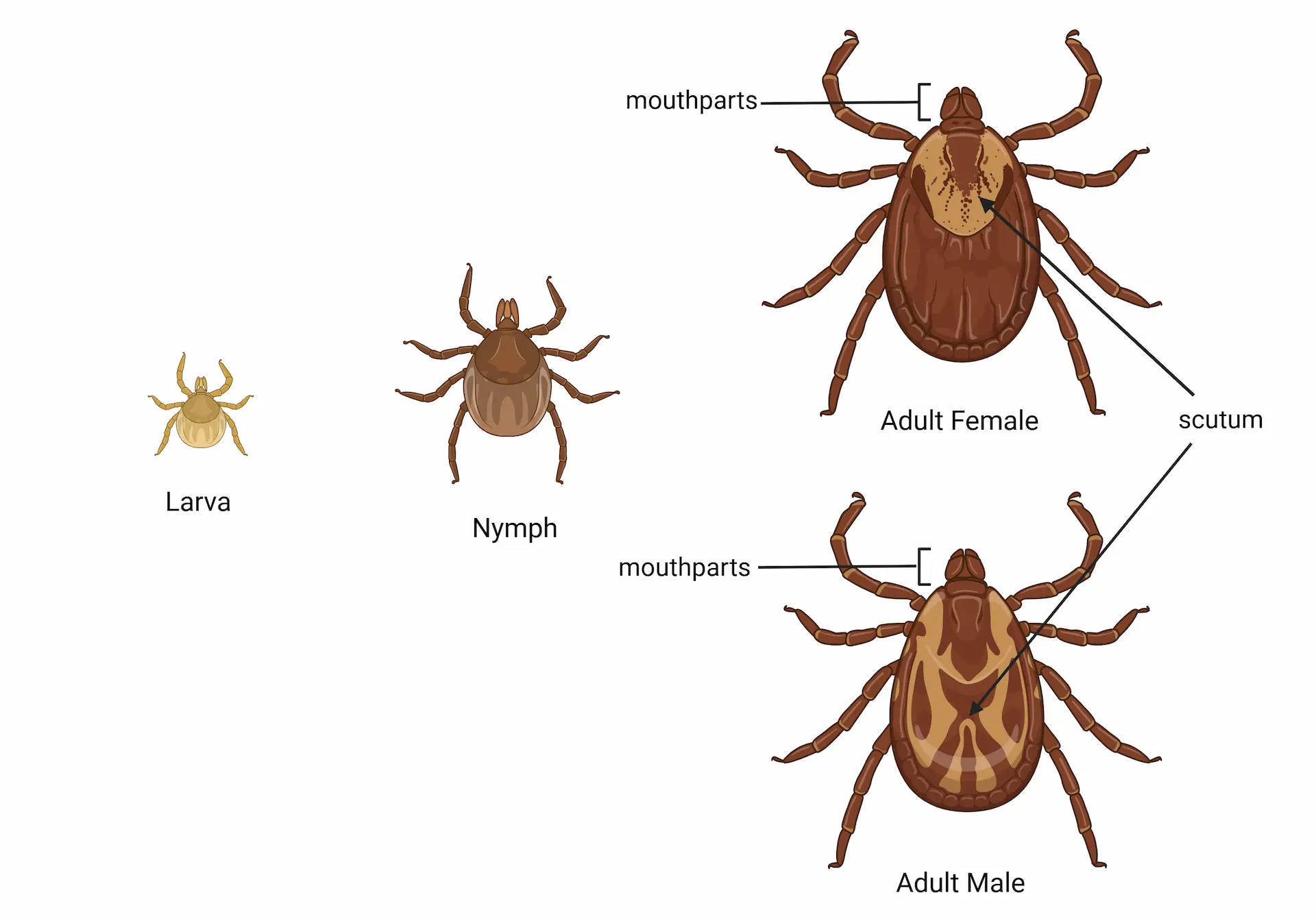
Ticks are arachnids and are closely related to spiders and mites. Unlike insects, ticks do not have wings or antennae. Their bodies are rounded or oval and do not have the clearly separated head, thorax, and abdomen found in insects.
Tick larvae have six legs, while nymphs and adults have eight. What may look like a tick’s “head” is actually a group of mouthparts used to pierce the skin and remain attached while feeding.
Hard ticks have a hardened shield called a scutum on their backs. In adult males, the scutum covers most of the body. In adult females, nymphs, and larvae, it covers only a small portion near the front, allowing the body to expand during feeding. As a tick takes a blood meal, its body can become much larger, rounder, and lighter in color.
Tick Look-alikes
Several small arthropods may be mistaken for ticks, especially when they are found crawling on people, pets, or household surfaces. Ticks do not have wings or antennae. Adult ticks and nymphs have eight legs, while tick larvae have only six, which can make them more difficult to distinguish from insects.
Below are some of the arthropods most commonly mistaken for ticks.
Beetles
.webp)
Small beetles, particularly weevils and carpet beetles, are frequently mistaken for ticks because of their rounded bodies and hard outer coverings. Unlike ticks, beetles have six legs and a pair of antennae. Many also have a visible line down the back where their hardened wing covers meet.
Aphids
.webp)
Aphids are small, soft-bodied insects commonly found on plants. They may be mistaken for ticks because of their rounded or pear-shaped bodies. Aphids have six legs, antennae, and two small tube-like structures projecting from the rear of the abdomen. Some life stages of aphids will have wings present.
Bed Bugs
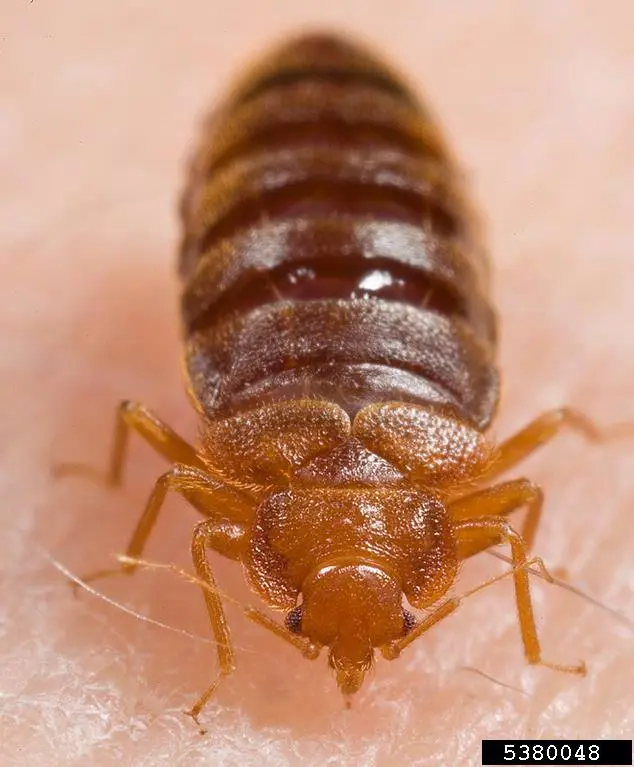
Bed bugs are reddish-brown, flattened insects that feed on blood. Like tick larvae, they have six legs, but bed bugs also have antennae and a distinctly segmented abdomen. Bed bugs occur indoors and do not remain attached to a host after feeding.
Lice
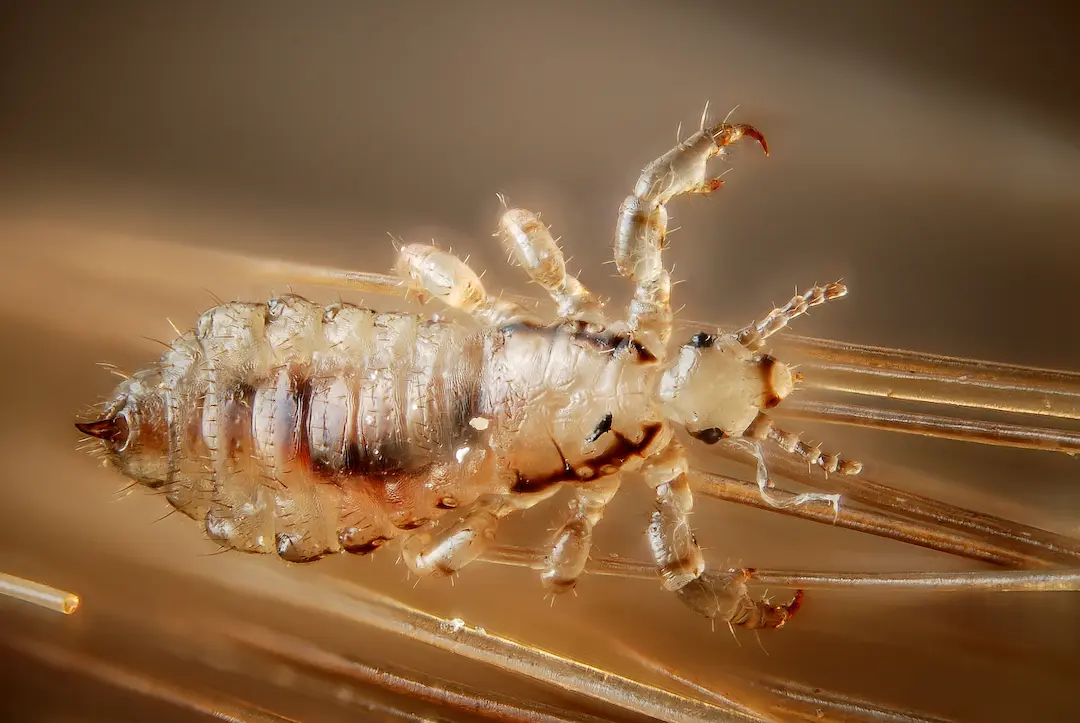
Lice are small, flattened insects that live on humans or other animals. They have six legs with claws adapted for gripping hair, feathers, or fur. Lice have antennae and typically remain closely associated with their host.
Spiders
.webp)
Like ticks, spiders are also arachnids with eight legs. Spiders usually have a distinct separation between the front and rear portions of the body, while a tick’s body appears more rounded and fused.
Mites
.webp)
Many mites are quite small and often go unnoticed, but some larger mites such as clover mites or red velvet mites may be difficult to distinguish from ticks. Both are arachnids with eight legs and a fused body. Mites are generally smaller than ticks and have soft bodies whereas the ticks most commonly encountered in Wyoming have hard bodies.