
.png)
Weed of the Month: Absinth Wormwood
For this Weed of the Month, we’re talking about absinth wormwood. Yes, this is the same bitter herb historically associated with absinthe, but we’re trying to keep this cocktail off the menu in Teton County.
Absinth wormwood, or Artemisia absinthium, is a County Declared, Priority 3 invasive plant in Teton County. It can push into disturbed areas, pastures, roadsides, fence rows, and other places where bare ground gives it room to settle in.
Where Is It From?
Absinth wormwood is native to Eurasia and was introduced to North America by early colonists as an ornamental and medicinal plant. Like many invasive plants, it started with good intentions and ended with a management problem.
Today, it is found across much of North America, especially in disturbed sites where native or desirable plants have been weakened. Once established, it can be hard to convince this wormwood to wiggle out in native landscapes.
What It Looks Like
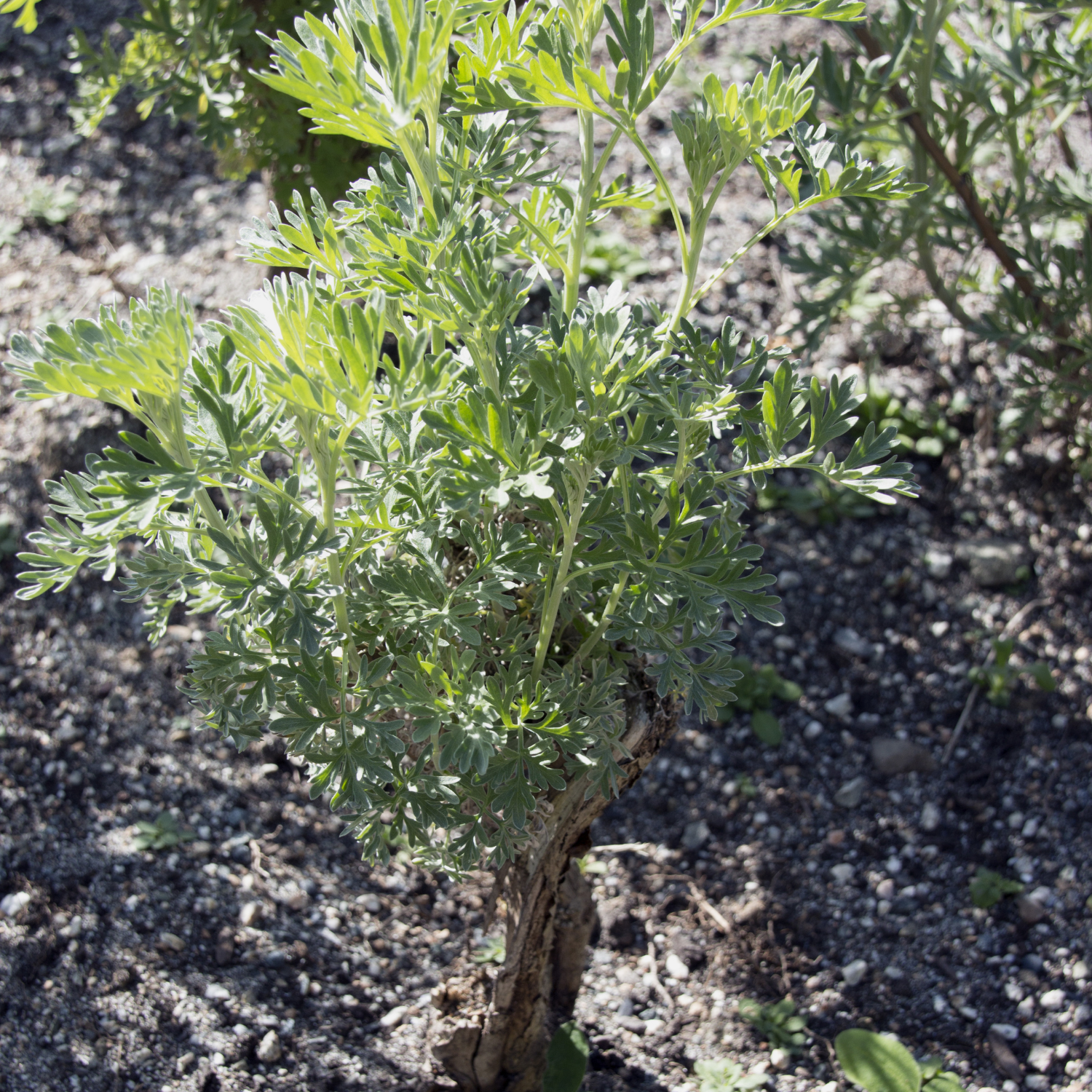
Absinth wormwood is an herbaceous perennial in the aster family. It commonly grows around 3 feet tall, though it can reach up to 5 feet in the right conditions.
The plant has branched gray-green to olive-green stems and leaves that are 2 to 5 inches long, deeply divided, and covered in fine, silky hairs that give the plant a gray-green appearance. One of the biggest giveaways is its smell: a strong sage-like odor if you crush the leaves.
From mid to late summer, absinth wormwood produces small, drooping yellow flower heads along the upper stems.
Why It’s a Problem
Absinth wormwood can outcompete desirable grasses and forbs in pastures, fields, rangelands, and native grasslands. That means less room for the plants we love and more room for weeds and pests—a bitter pill for all of us.
This pest is also a prolific seed producer. Seedlings can emerge from late spring into early fall, and seeds may remain viable for several years. Absinth wormwood can also spread through roots and rhizomes, making established patches harder to manage over time.
Where It’s Found
Around Teton County, keep an eye out in disturbed soils, landscaping, forested areas near past disturbance, roadsides, fence rows, pastures, waste areas, and dry or moist open sites.
Bare ground is an invitation. The healthier and more competitive the surrounding plant community, the harder it is for absinth wormwood to gain a foothold.
Management
Prevention is the best place to start. Avoid disturbing soil when possible, reseed bare areas with desirable species, and keep pastures and rangelands healthy through proper grazing and land management.
Small patches can be hand-pulled or dug when soil is moist, but it is important to remove the taproot and lateral roots. Repeated mowing before seed production can help weaken the plant, though mowing alone may not solve the problem. Burning is not considered an effective control method, and grazing is not recommended for managing absinth wormwood.
For larger plants or dense infestations, herbicides may be effective. Fall treatments can help target the root system, while treatment before flowering can reduce seed production. Always read and follow the label and contact Teton County Weed & Pest if you have questions about the safest and most effective option for your site.
How You Can Help
If you think you’ve found an infestation of absinth wormwood in the backcountry, take clear photos of the full plant, leaves, stems, flowers, and surrounding area. Note the location and contact our District for support.