
.png)
Detection and Management Strategies for Insecticide Resistant Mosquitoes
A Mosquito Program Inside a Weed & Pest District
In Wyoming, mosquito control looks a little different than in many other states. Under the Wyoming Weed & Pest Control Act of 1973, each county has a Weed & Pest District responsible for managing invasive plants, agricultural pests, and public health pests. Mosquitoes are not automatically included, meaning counties must choose to operate mosquito programs based on local need.
At Teton County Weed & Pest District (TCWP), mosquitoes are a major focus alongside invasive plants. Our integrated mosquito management (IMM) program includes surveillance, larval and adult control, pathogen testing, community outreach, and insecticide resistance monitoring — all within a county better known for weeds, wildlife, and wide-open landscapes than mosquito research.
Why Mosquitoes Matter in Wyoming
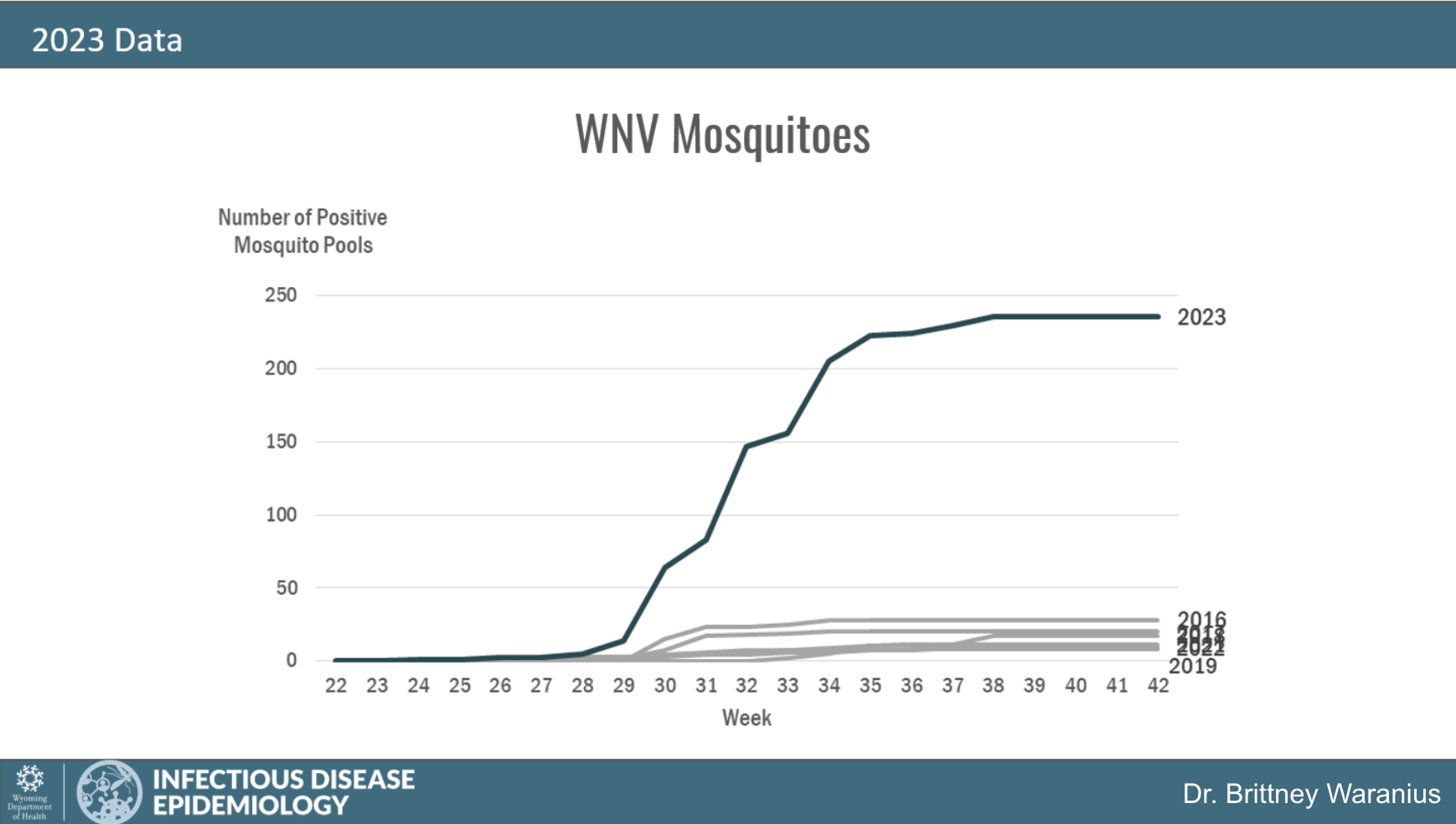
West Nile virus (WNV) is the most significant mosquito-borne disease in Wyoming, with Culex tarsalis serving as the primary vector statewide. In 2023, Wyoming experienced nearly three times the number of human WNV cases compared to any year in the previous decade, with most cases linked to in-state exposure. During outbreaks like these, adulticide applications become a critical tool for reducing infectious mosquito populations near people.

However, adulticides rely on a very limited number of insecticide classes. Repeated use — even at low frequencies — creates strong selection pressure, allowing resistant mosquitoes to survive and pass resistance traits to future generations.
Field Trials and Real-World Implications
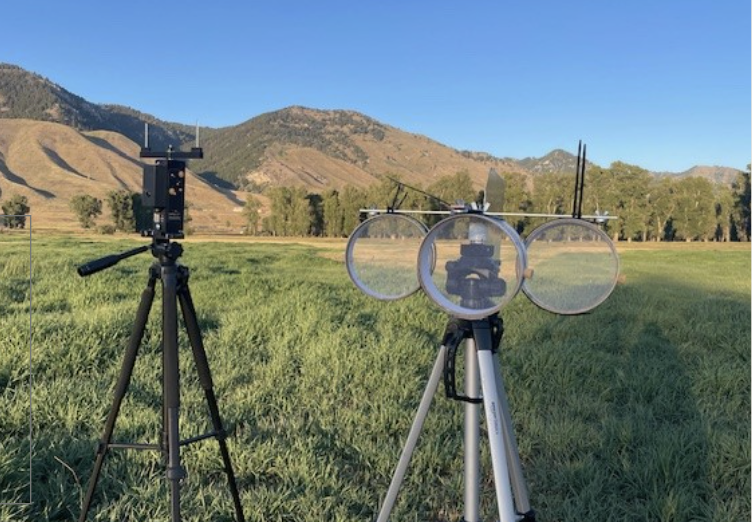
To better understand how resistance translates to field performance, TCWP conducted field cage trials using two local Culex tarsalis populations and a known susceptible strain. Trials evaluated permethrin, malathion, and a newer product with multiple modes of action, which refers to how an insecticide works inside the mosquito’s body to disrupt biological processes to cause death or impair development. Mortality results confirmed that resistance observed in the lab can reduce control under operational conditions.
Detecting Insecticide Resistance in Teton County
To accurately test insecticide resistance locally, our team started looking for areas to conduct mosquito cage trials. One of the biggest challenges we faced was simply finding Culex tarsalis breeding sites. In Teton County, flood-irrigated ranchlands near residential areas are the most consistent sources of nuisance and vector mosquitoes. In 2022, we identified breeding sites on a ranch north of Jackson and conducted preliminary bottle bioassays using permethrin and malathion. Both assays suggested resistance, though sample sizes were small.
In 2023, we expanded sampling and identified a second breeding site on a neighboring ranch approximately one mile away. Rather than pooling mosquitoes, we tested each population separately to better understand how focal resistance might be.
What We Found: Multiple Resistance Mechanisms
This recent testing using bottle bioassays, synergist trials, and enzyme analysis revealed concerning trends in local mosquito populations.
When exposed to permethrin, mosquitoes collected from the northern ranch showed significantly higher mortality when paired with the synergist piperonyl butoxide (PBO). This pattern indicates metabolic resistance — meaning these mosquitoes produce elevated detoxification enzymes that break down the insecticide before it can be effective.
In contrast, mosquitoes from the southern ranch did not show increased mortality with PBO and exhibited lower enzyme activity. This, paired with other data, suggests a different mechanism at work: target-site resistance, where changes in the mosquito’s nervous system reduce the insecticide’s effectiveness.
For malathion, the synergist DEF increased mortality at both locations. This points to metabolic resistance at both sites, potentially combined with reduced sensitivity of acetylcholinesterase — the enzyme malathion is designed to disrupt.
Most notably, these results mark the first documented evidence of insecticide resistance in Culex tarsalis in Wyoming — including resistance to multiple classes of insecticides in populations found just one mile apart.
These findings prove the importance of continued monitoring and adaptive management to preserve the effectiveness of mosquito control tools.
What Comes Next for Our Integrated Mosquito Management Program
Insecticide resistance doesn’t mean control is impossible — but it does require adaptation. Ongoing resistance surveillance, product rotation, use of mixed modes of action, expanded larviciding, and non-chemical control methods are all critical. Perhaps most importantly, resistance can’t be managed if it isn’t detected.
Teton County’s experience highlights a broader reality: insecticide resistance may already be present in many regions, simply undocumented. Looking for it is the first step toward staying ahead of it.